Profound Zero Click Singapore 2026
Profound brought its AI search summit to Singapore on 29 October 2026. The talks, the research figures and the product launches, with the slides I photographed in the room.
Key Takeaways
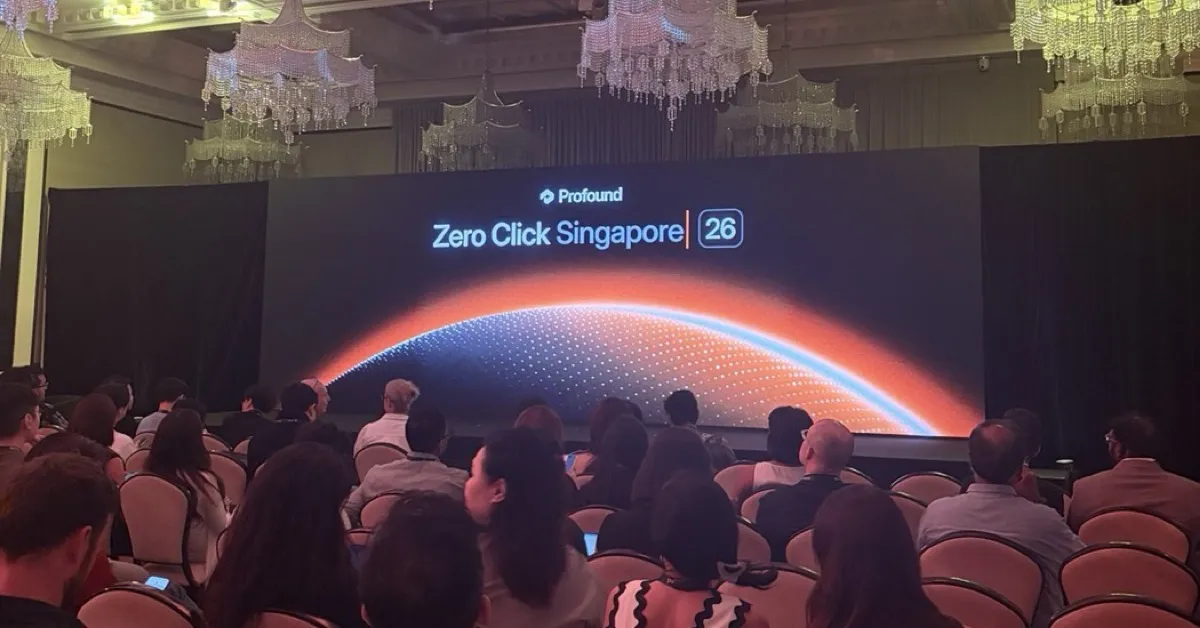
- Profound's Zero Click Singapore ran on 29 October 2026 at Raffles Singapore, the last stop of its Zero Click world tour.
- Josh Blyskal's research talk: ChatGPT moved from answer engine to evaluation engine after 8 August 2026, and Profound's research says it now cites commercial pages 35% more and listicles 38% less.
- Standard Chartered's Nauman Bashir: being cited is not enough; most wrong AI answers about the bank traced back to its own old content.
- Profound launched AIM inside Teams, Slack and email, Profound Slides, plain-language agents and Profound Ads, and said its Singapore office opens by the end of 2026.
- Next event: Zero Click New York, April 2027.
What happened at Zero Click Singapore 2026
Profound, the AI search analytics company, brought its Zero Click summit to Raffles Singapore on 29 October 2026, the last stop of its Zero Click world tour after London and Sydney. Profound shares recordings later through Zero Click Unlocked. If you missed the day, or need the figures and slides to brief your team, the talks are below in running order. The Unilever and DHL Express panel is not covered.
The day had one thread. Answer engine optimisation (AEO) is the work of getting a brand cited and recommended inside AI answers, and every speaker argued that the job is changing: AI no longer only repeats what the web says about a product, it now evaluates the product itself, and personal AI agents are starting to buy on the buyer's behalf.
Five things to take away
AI has moved from helping discovery to helping evaluation, so it now shapes the buying decision itself. In Profound researcher Josh Blyskal's words: "ChatGPT was a pure answer engine. It was regurgitating answers that were otherwise on the web." Now "ChatGPT has moved to being an evaluation engine. It is building its own understanding." It searches deeper "to find more facts from first principles so it can do the evaluation itself." And buyers use it across the whole funnel: "People are using AI to evaluate, people are using AI to compare, people are using AI to buy." Profound's research says 60% of first prompts name no brand, so the AI also builds the shortlist.
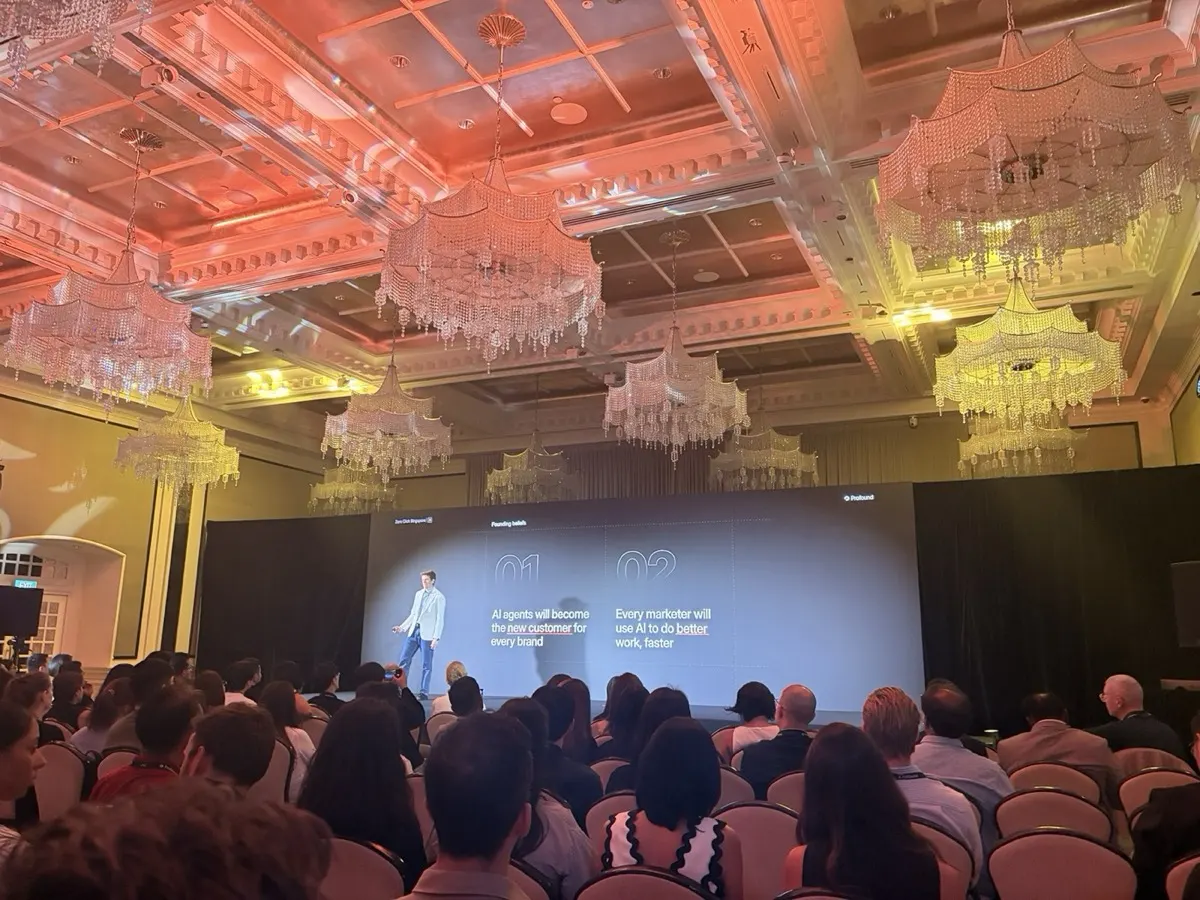
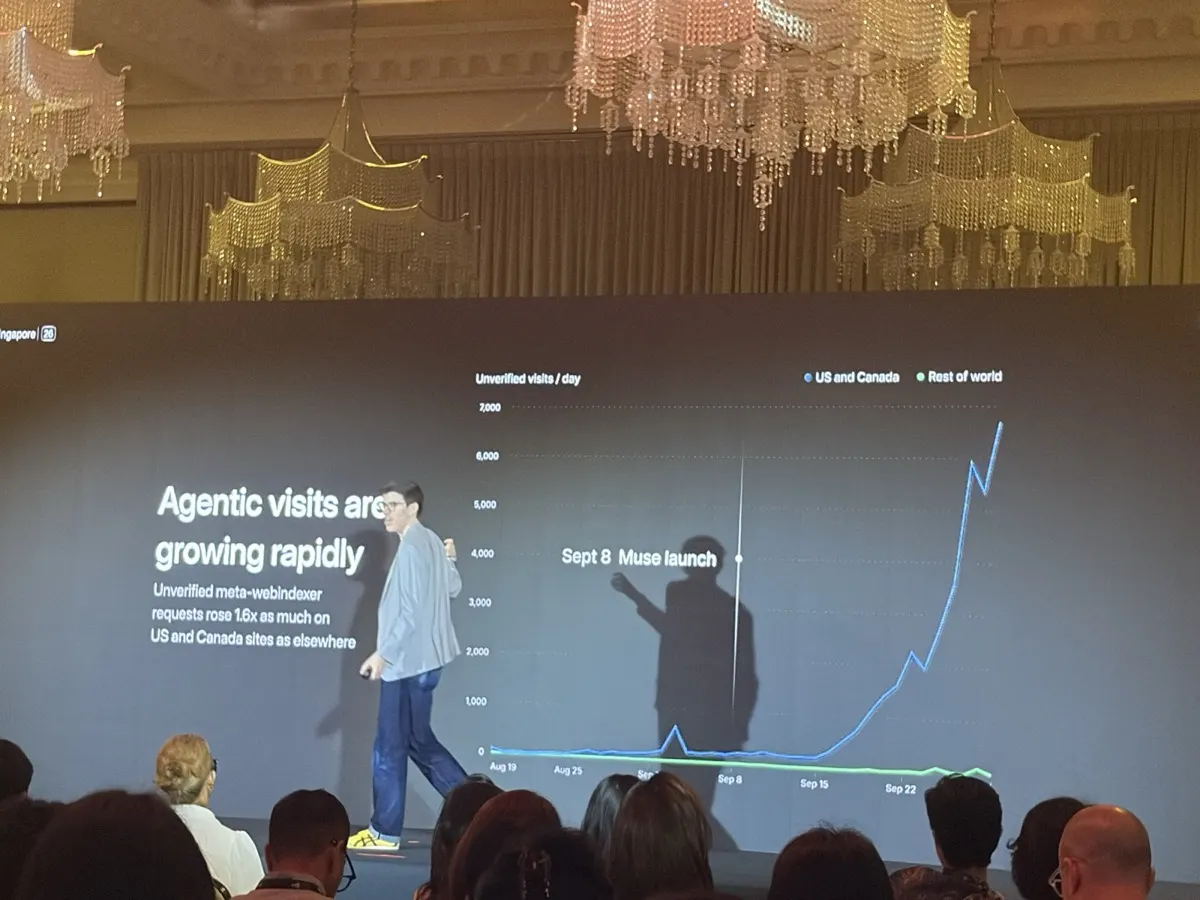
Redrawn from Josh Blyskal's "AEO exists on a curve" and "ChatGPT is becoming the evaluator" slides. He said Claude's web search still works the first way. Muse launched on 8 Sep and reached Singapore on 28 Oct. Evaluation runs on facts, so publish yours. Profound's research says ChatGPT now cites commercial pages (landing, listing and product pages) 35% more and specs and docs 84% more. It cites listicles 38% less and social posts 91% less. Being cited gets you on the shortlist. Clear product facts are what the AI judges you on. "If it has 17mm of foam, say it has 17mm of foam."
In 2026, being cited is not enough. Being correct matters more. Nauman Bashir of Standard Chartered: "We thought it's just about being there, just about being cited. But not necessarily. It has to be more than that." His reason is that "customers may not be coming to our properties." "All the effort we put in to create all those websites may not be used, but the information is being used. So let's make sure that is presented accurately." When AI quoted a 4% rate for the bank's 5% product, the source "was us most of the time": old terms and conditions that AI read "differently than what we have thought". His ask: "make sure that you are cited and being visible for the right reasons and with the right information."
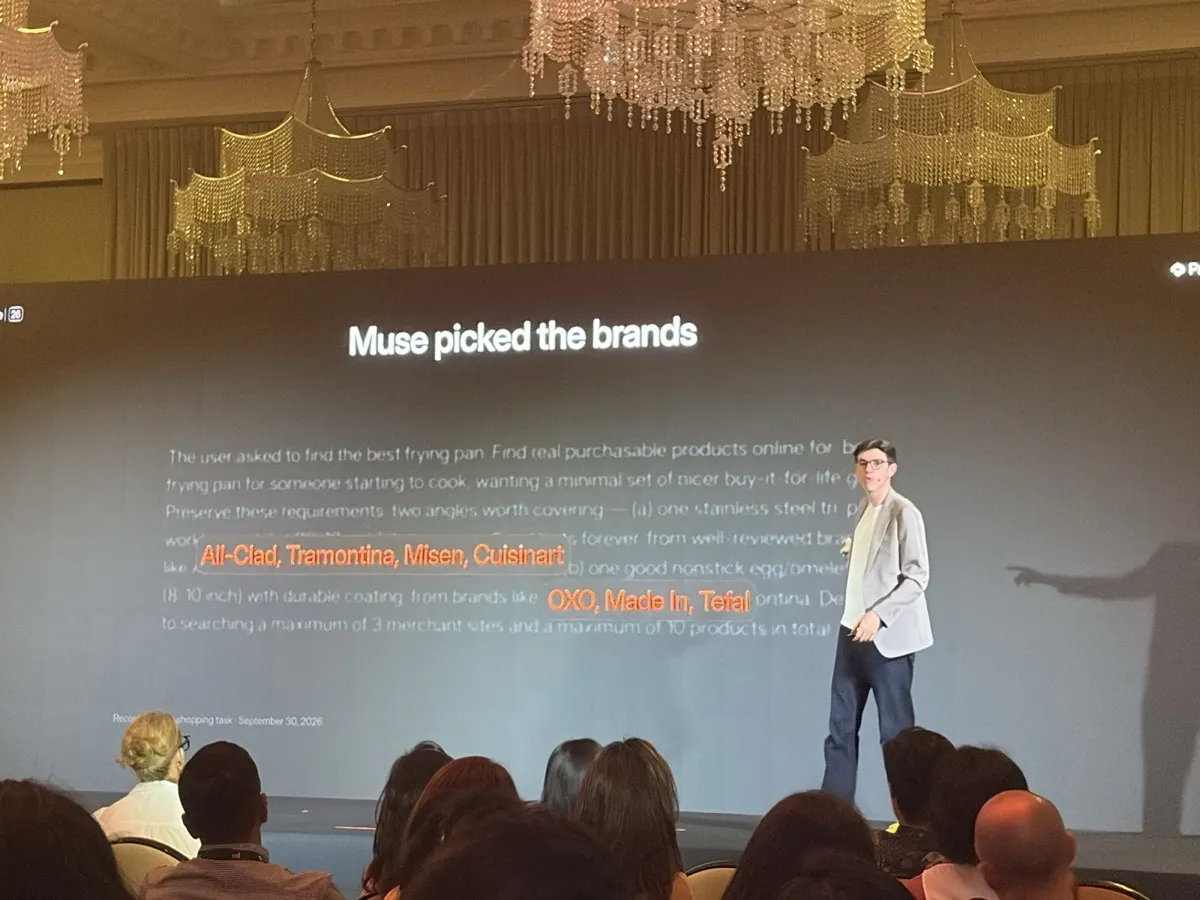
AI agents become the new customer for every brand. That is the first of Profound's two founding beliefs, and Josh Blyskal showed what it looks like today. His slide: "Muse and Instinct are the leading edge of this shift." These personal agents are "proactive" (they act before you ask), "action-ready" (they work on their own computer) and "context-loaded" (they already know you). Asked for the best frying pan, Muse chose the material, turned one pan into two and picked the brands before its browser searched anything. In his words: "Before the citation, before the fan out, before the sentiment, before the accuracy, before the visibility, before the searches, before the sources, … the agent in this case had already made its opinion up." And: "Every brand and product in the world is going to be subject to this same level of decision making from agents." The move: test whether an agent can find, evaluate and buy from your site, and fix what stops it.
Context decides quality. Profound's CEO said generic AI content comes from missing context, not from the AI. Feed it your brand, customers and calls.
Marketing in the AI Era: James Cadwallader
Co-founder and CEO, Profound. Opening keynote, scheduled 2:30pm.
- Buyers meet a brand in many places: Reddit, reviews, product pages, its own site. For the first time, all of that is compressed into one AI conversation.
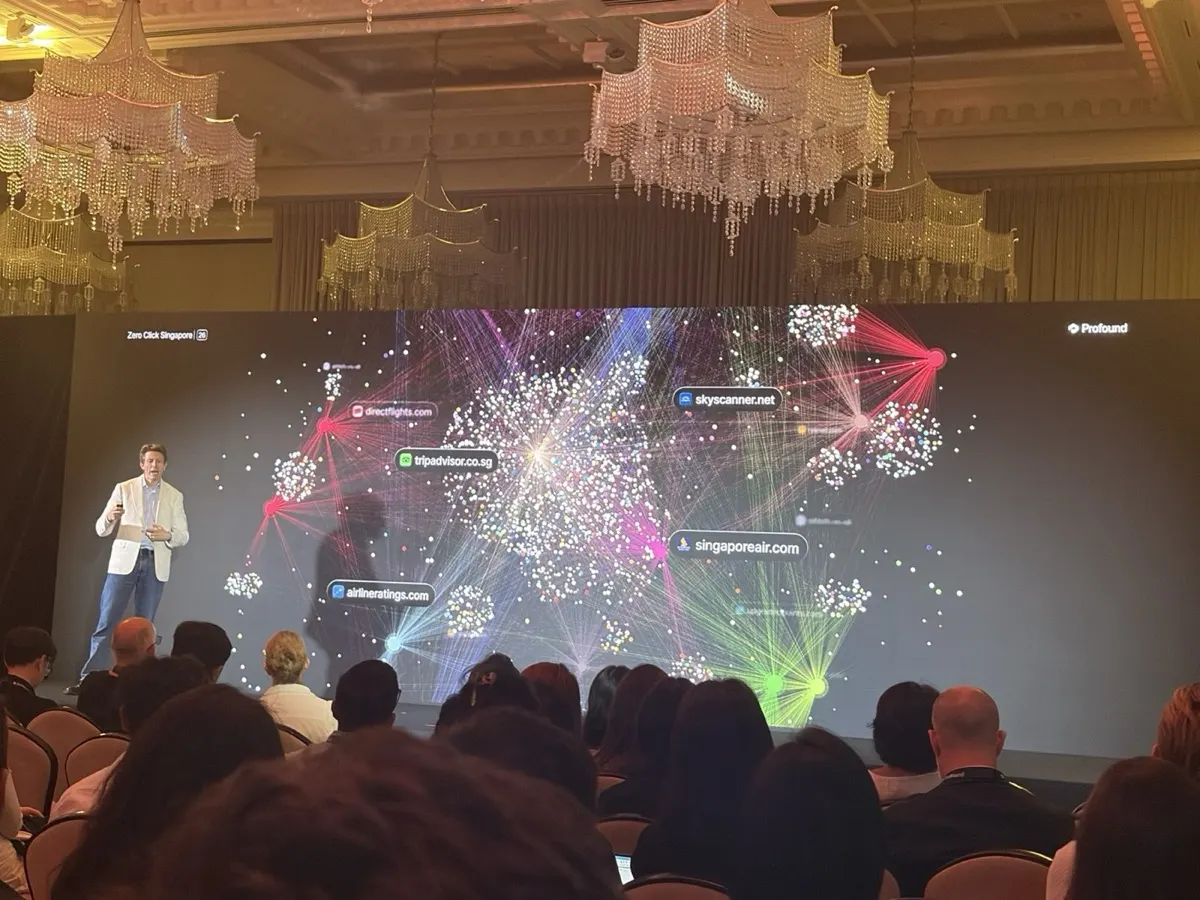
- He showed every source one AI model read to understand Singapore Airlines in one week. Influencing that by hand takes an "inhuman amount of work".
- "Slop is a skill issue." Blaming AI for generic content is like blaming your pen for a bad drawing.
- His fix is context. Profound's own engineers no longer write code by hand, and the lesson they learned is that AI needs full context to do good work.
- Marketing will split two ways: human-first work (events, dinners, handshakes) and agentic work, built with agents for agents as the new customer.
- Marketing has no single "correct" answer, unlike maths. So human creative judgment stays.
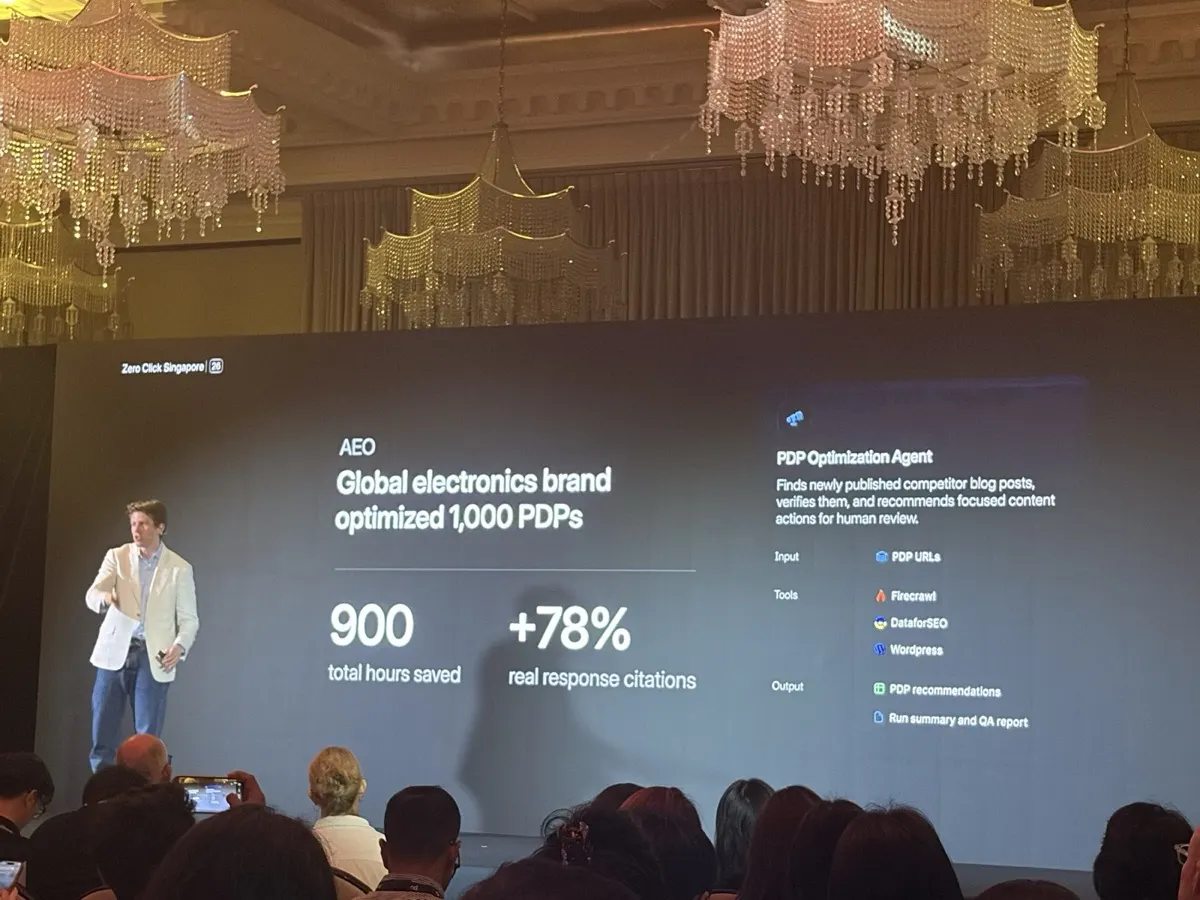
The Marketing Engineer: Nick Lafferty
Founding marketing engineer, Profound. Scheduled 2:55pm.
A marketing engineer is a marketer first. They are part artist, who knows the brand and what sounds like "us". They are part builder, who connects data, tools and AI into workflows that run again and again.
- Aaron Liu at Notion built one system that copies ad creative into many languages across Google, Meta and LinkedIn. It saves him about 32 hours a month.
- Austin Lau, Anthropic's first growth marketer, stopped downloading ad data by hand each week. Claude now pulls it into a live view with budget by channel.
- Where to start: pick the most manual, repetitive task you have where the result is easy to check. Automate that first.
His five-step maturity ladder
- Prompting: ask, get an answer.
- Workflow: save instructions, context and examples to reuse.
- First agent: uses tools, has a goal and limits.
- Several agents that work together.
- Proactive agents that tell you what to do today.
Figma, Airbus, Dell, Intel, Samsung, Google and Databricks have hired or are hiring for this role, he said. His close: "You are a Marketing Engineer. You just didn't know it."
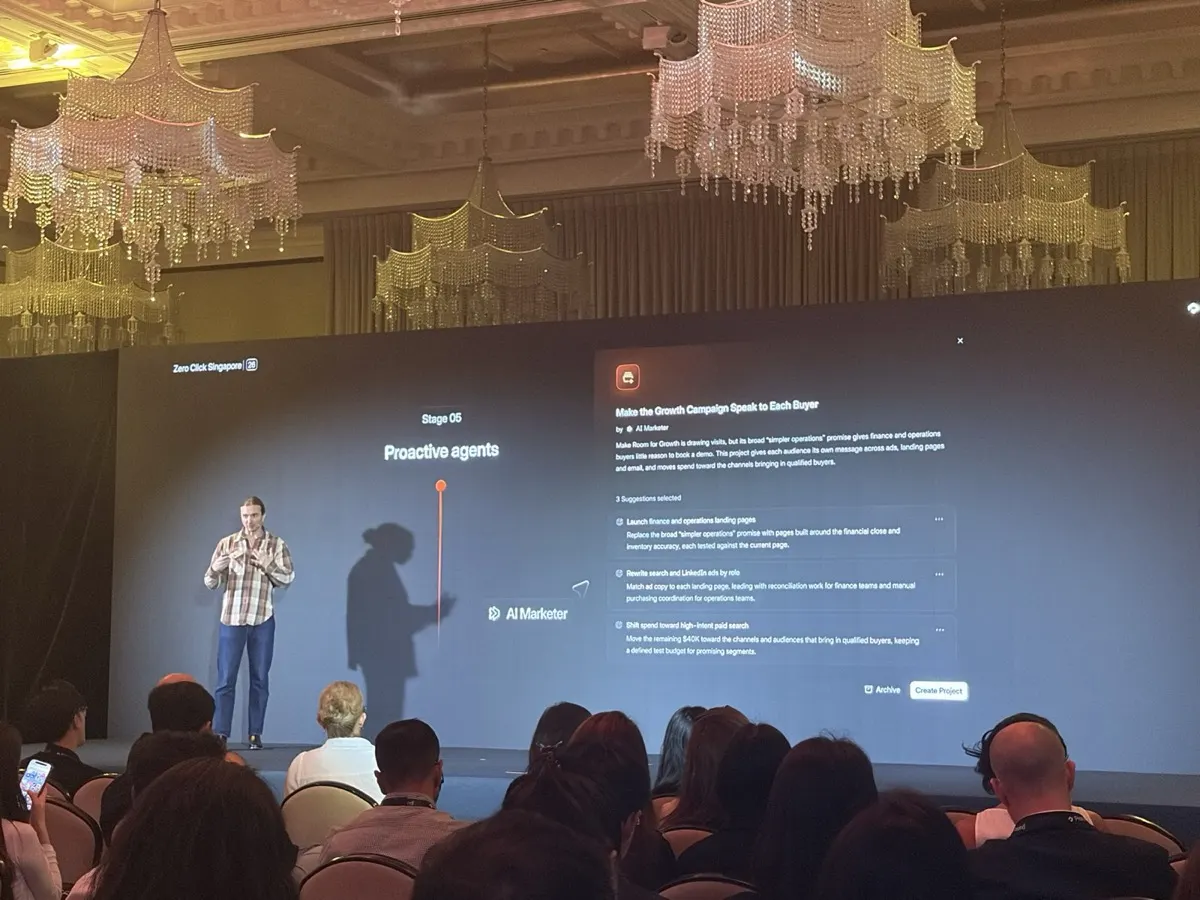
Being Cited Isn't Being Correct: Standard Chartered
Nauman Bashir, Global Head of WRB Digital Sales at Standard Chartered (WRB is the bank's wealth and retail banking business). Scheduled 3:20pm.
- The bank started with visibility. Then it tested 5,000+ prompts and found wrong answers across AI platforms.
- One example: AI showed a 4% rate when the real rate was 5%.
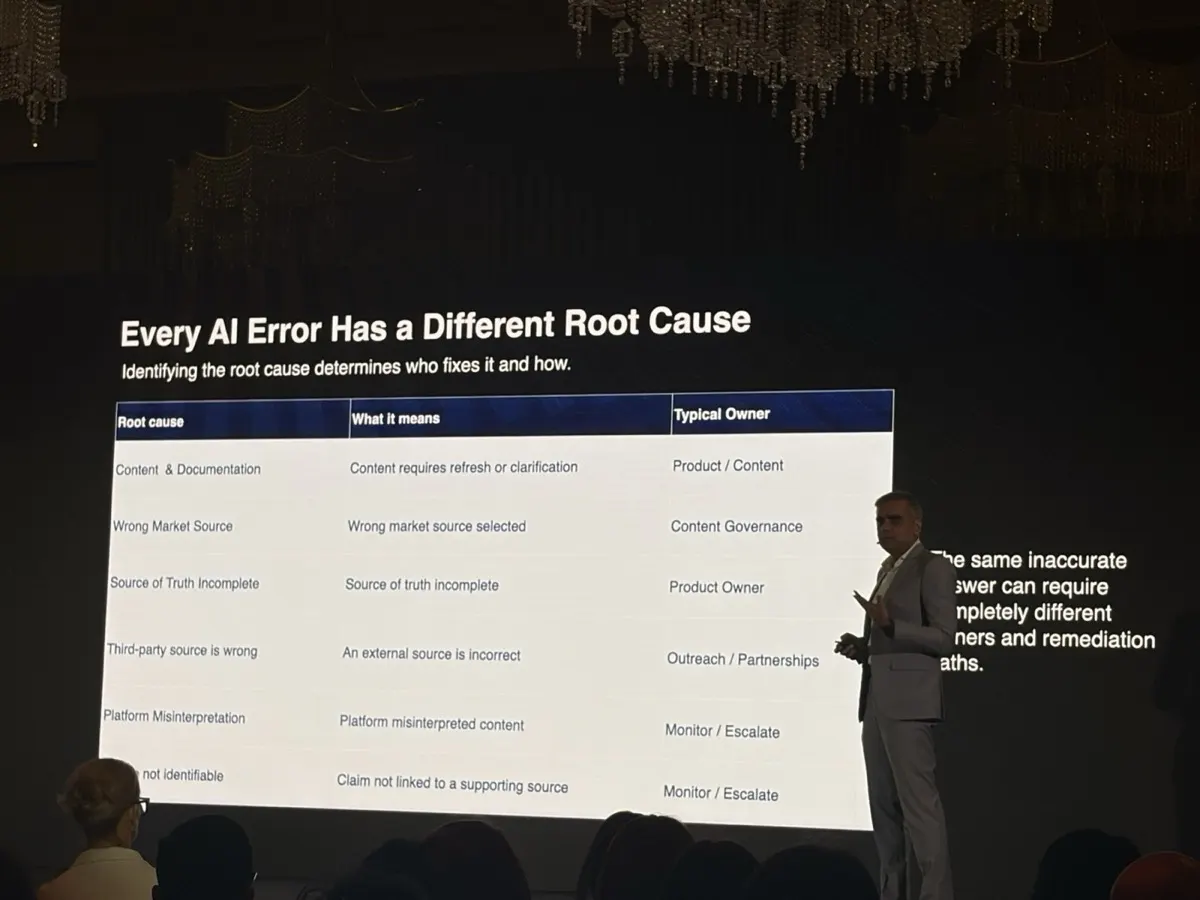
- Most errors came from the bank's own content: old terms and conditions, unclear documents, pages not structured for AI to read.
- Fixing it needed product, content, risk and creative teams, not only marketing.
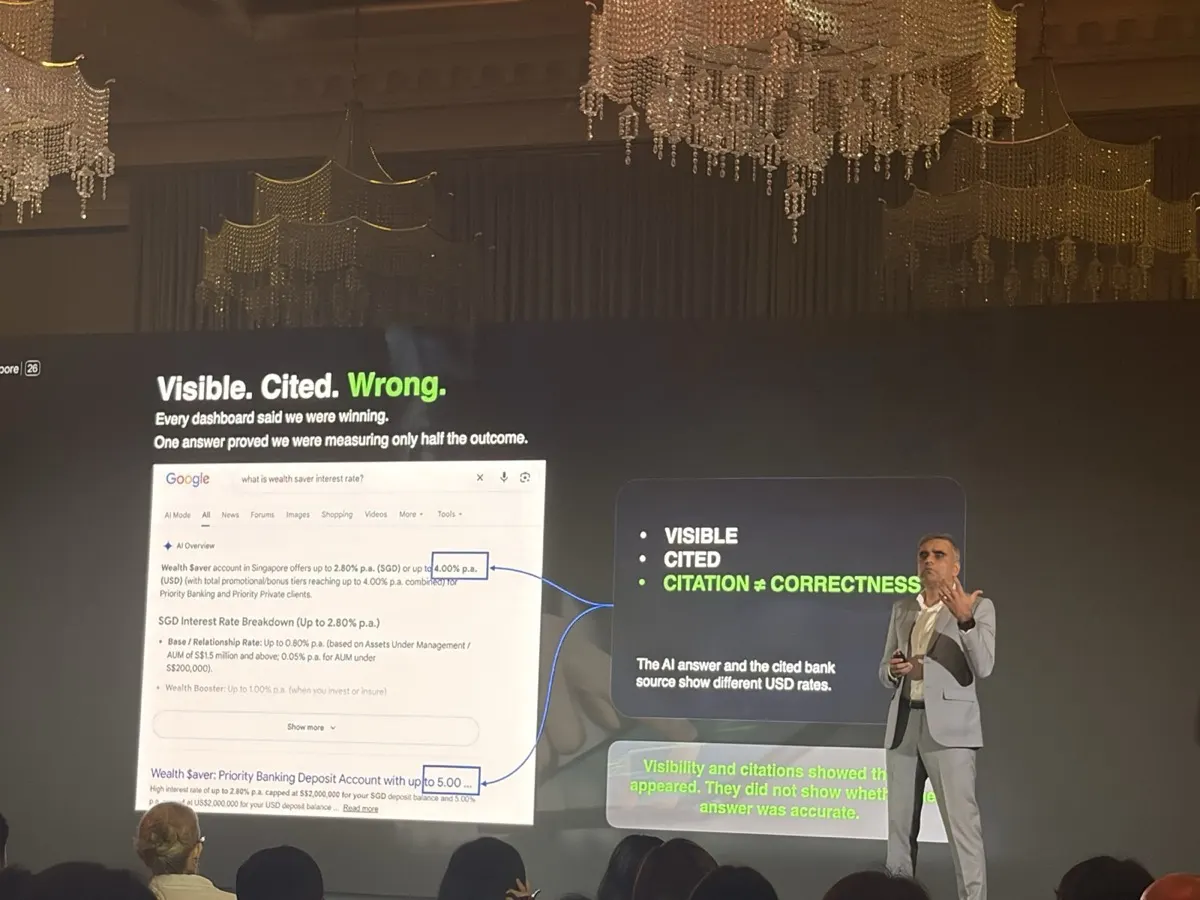
Being cited gets you into the answer. Being correct earns the trust.
Standard Chartered closing slide
Accuracy is measurable once you track what the answers say, not only whether you appear. Our guide to measuring AEO covers which metrics to track alongside visibility.
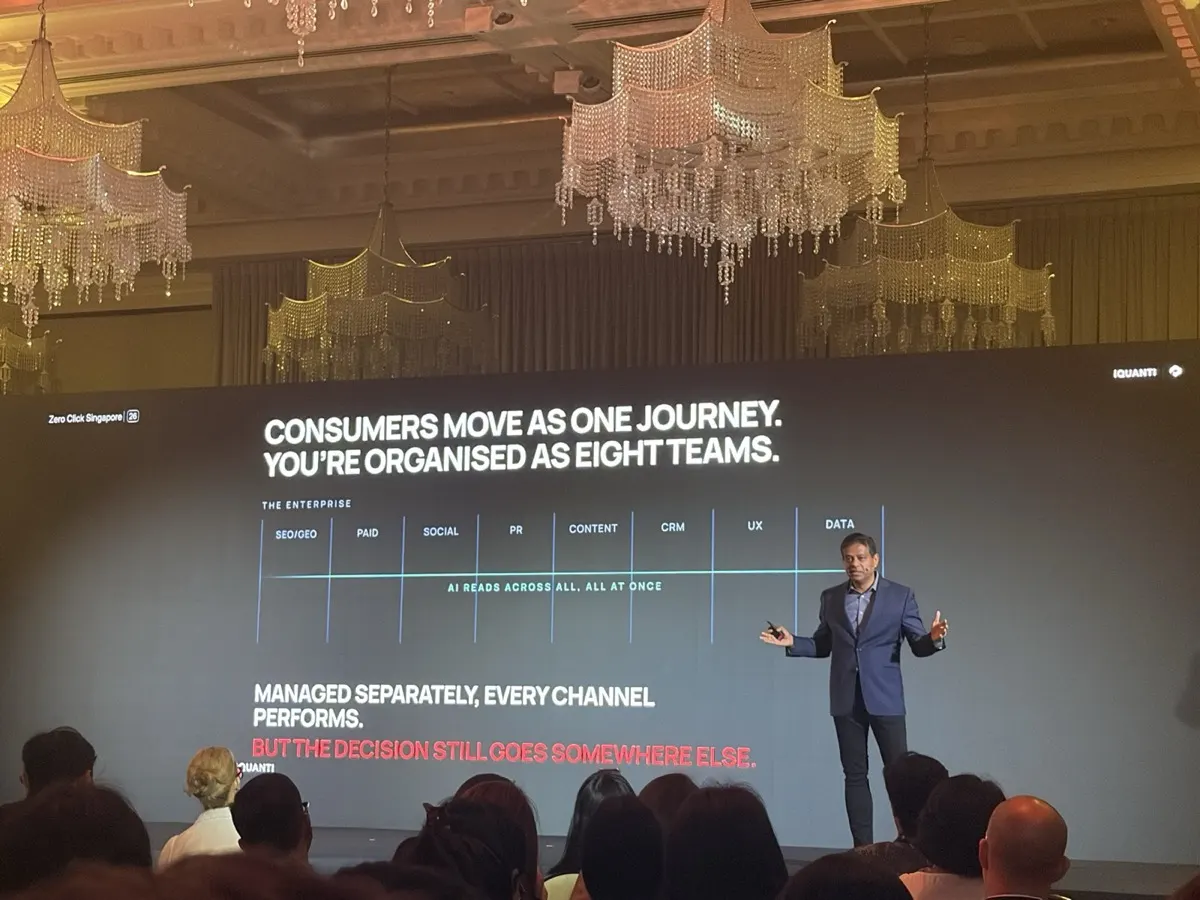
From Scattered Signals to Real Time Actions: iQuanti
Arnab Sen, CEO, iQuanti. Scheduled 3:35pm.
- AI is moving from answering, to guiding decisions, to completing purchases.
- In iQuanti's Singapore survey, 49% of consumers were comfortable letting AI submit an application for them. That rose to 77% when they trusted the brand.
- His example: a 27-year-old moving from Kuala Lumpur to Singapore shows signals (rent, movers, money) about six weeks before she needs a credit card. A brand can see the need before she asks.
- He called for one signal feed across search, AI prompts, communities and competitor data, run as an ongoing rhythm, not a one-off project.
The Genesis of Agentic Attention: Josh Blyskal
Researcher, Profound. Scheduled 3:50pm.
Profound says this is new data from tens of millions of AI citations, thousands of network logs and hundreds of real browsing sessions. Every figure below is Profound's research as presented on stage.
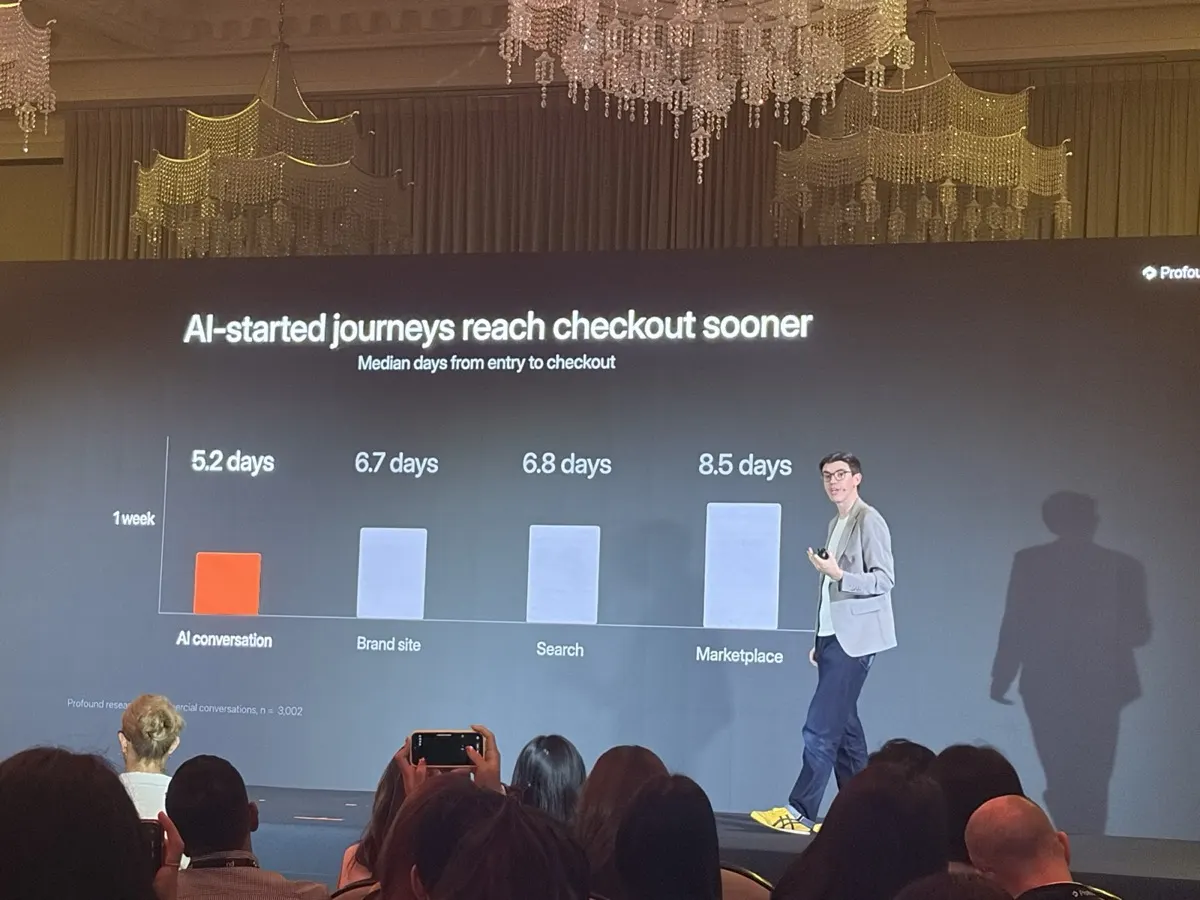
- The funnel is no longer a straight line. 34% of people keep looping in discovery and 40% stay in evaluation.
- Blyskal said people describe budget in words ("affordable", "cheap") four times more often than with a number. Plan prompt tracking with that in mind.
- ChatGPT moved from answer engine to evaluation engine. It searches about twice as deep but cites the same number of sources. It wants facts so it can judge for itself.
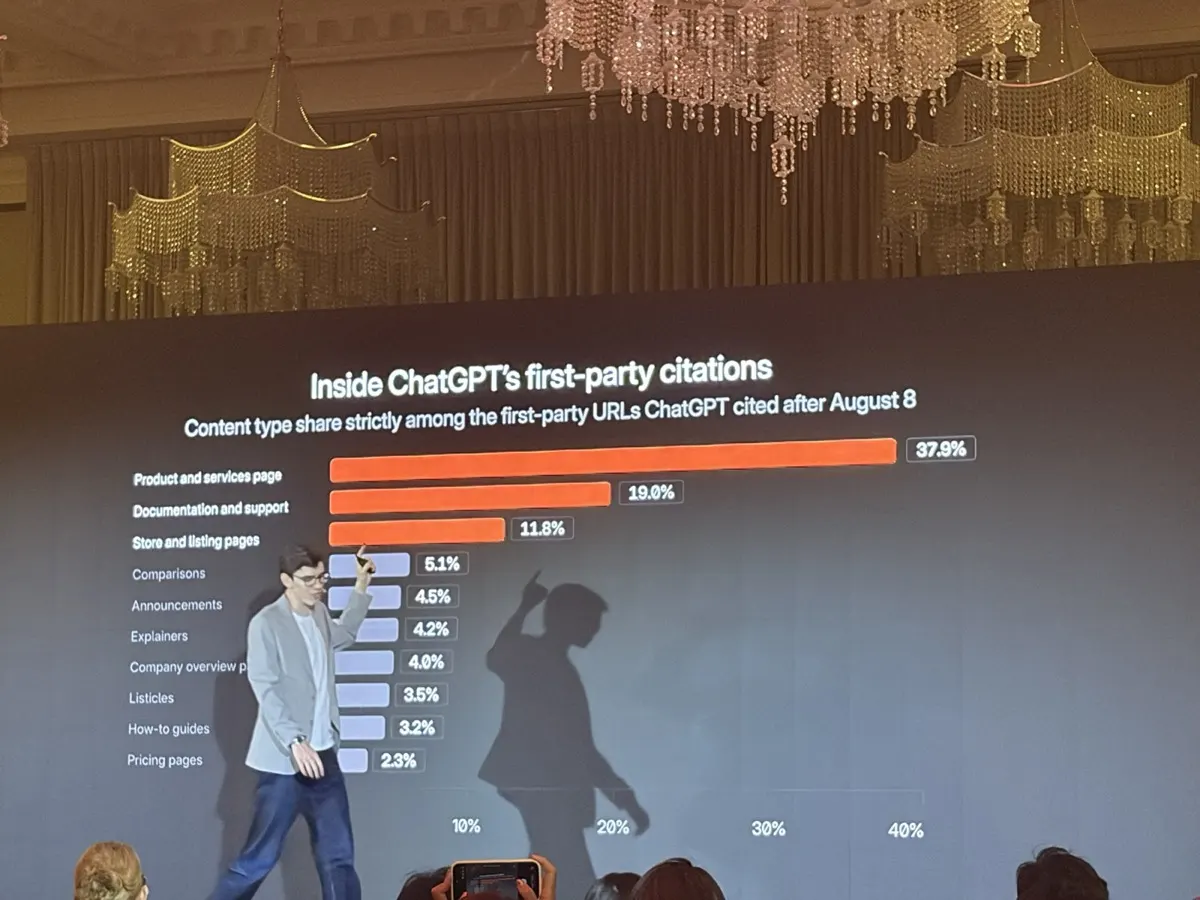
- ChatGPT now cites commercial pages 35% more and docs and specs 84% more. Listicles are down 38% and social posts 91%.
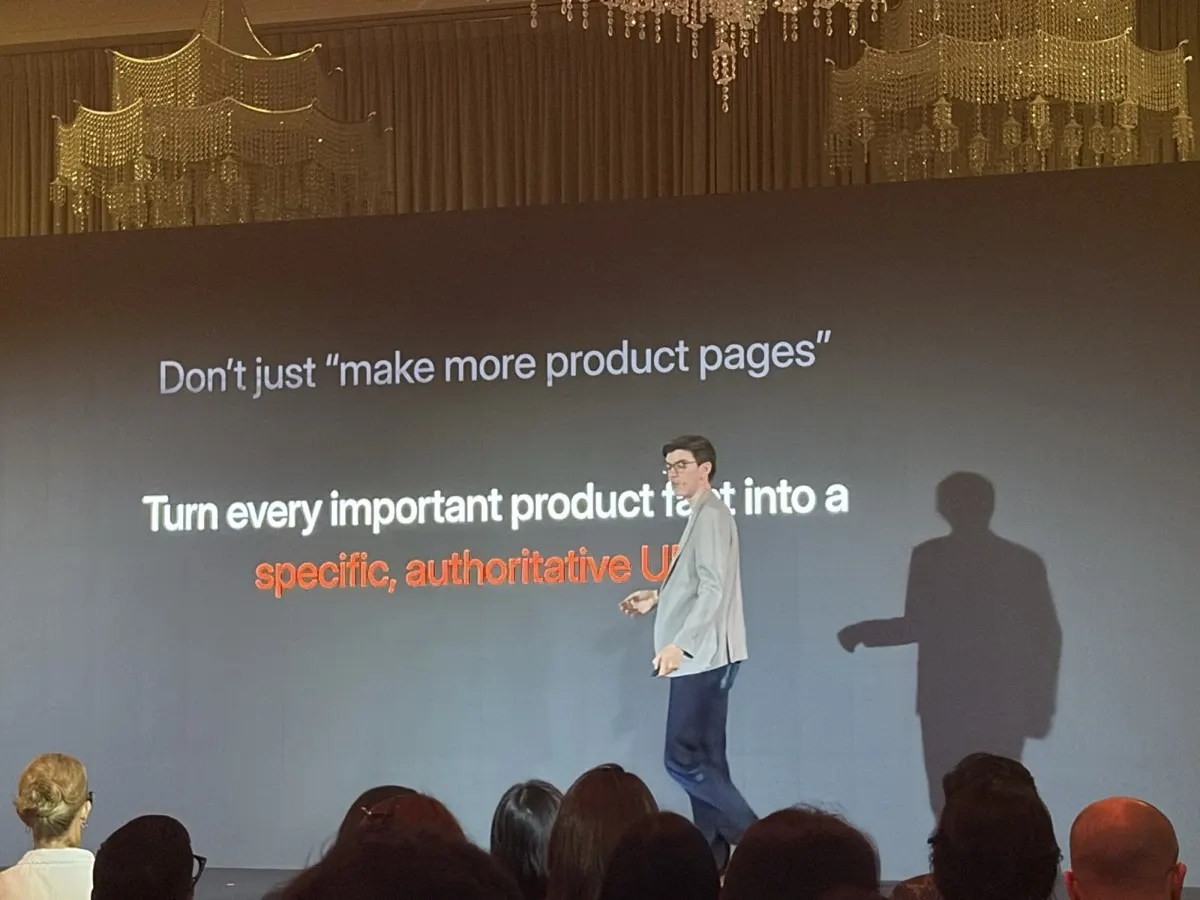
- Product pages, docs and listing pages make up 68% of what ChatGPT cites from brands. His advice: "If it has 17mm of foam, say it has 17mm of foam."
- Claude still prefers comparisons, listicles and editorial content: 64.8% of its citations, against 33.5% for ChatGPT and 24.1% for Google AI Mode. He expects that to change.
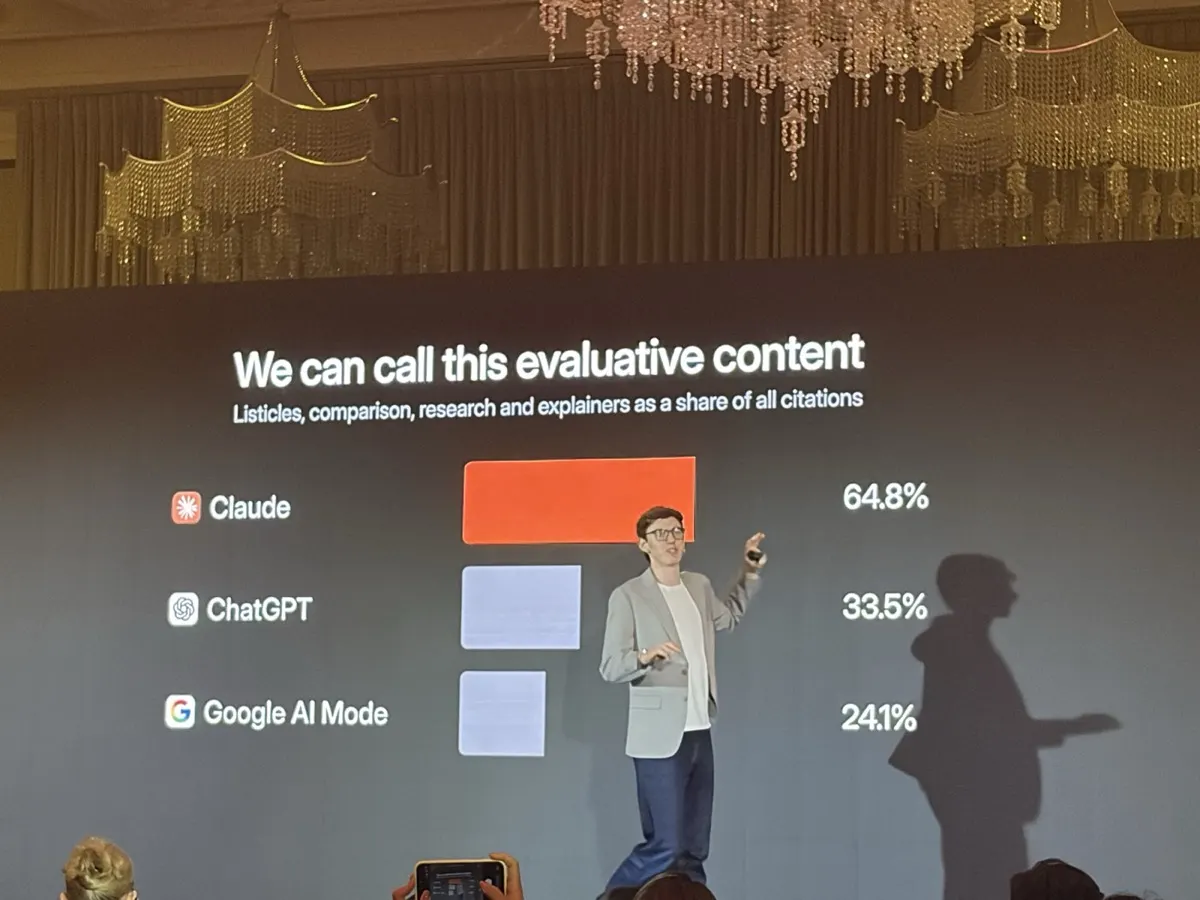
The gap between Claude and ChatGPT matches what we see in our own data: in our study of three AI engines, 94.2% of cited pages appeared in exactly one engine. Each engine needs its own read.
Personal agents: Muse and Instinct
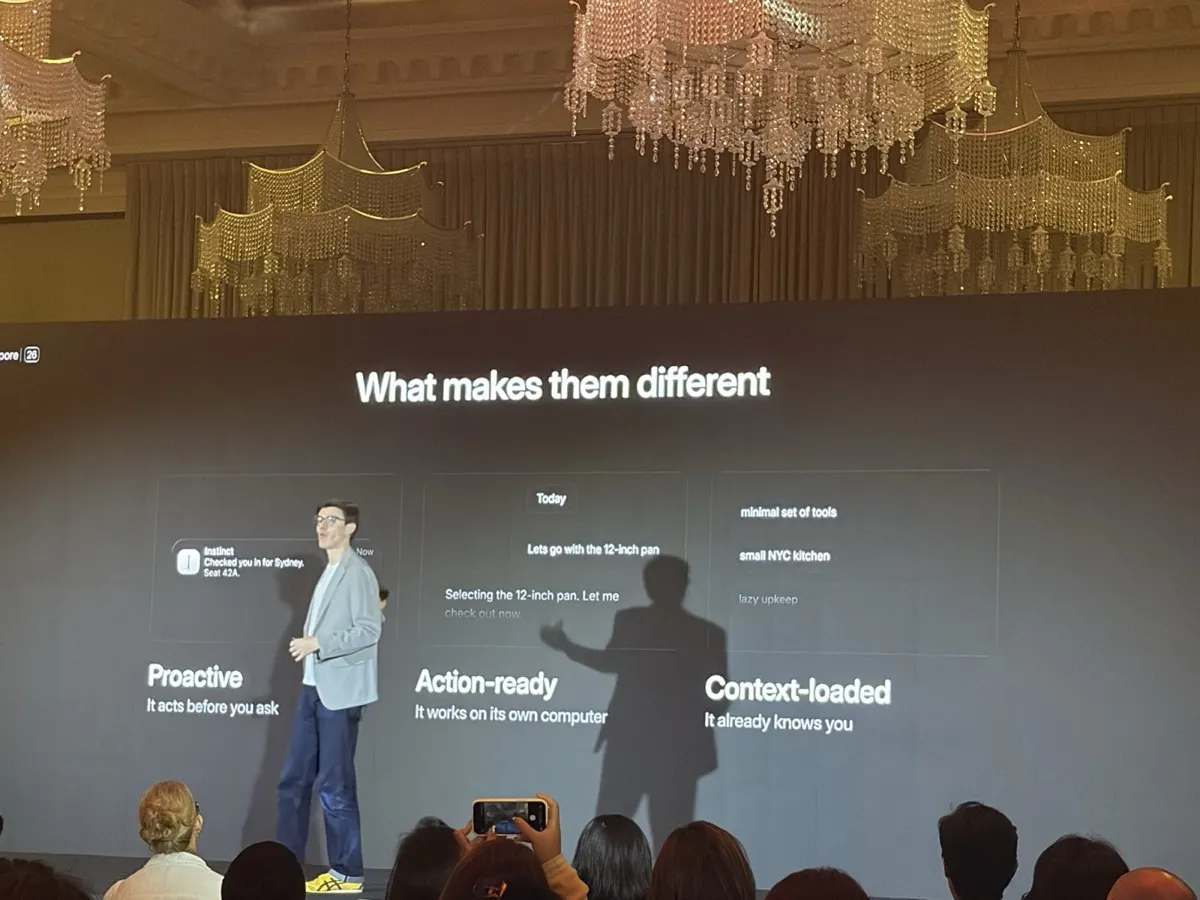
"They're anticipating your needs. They're checking you in for flights." They are "action ready" and "context loaded": "they know what size it is, they know what hotel you're staying at… they know everything about the situation at hand." His conclusion: "Every brand and product in the world is going to be subject to this same level of decision making from agents in the future."
The sunglasses story
Boarding a flight to Sydney, he texted the personal agent Instinct: he needed sunglasses for sailing, $200, the agent should choose and send them to his hotel. A pair he had no hand in choosing was waiting at reception. He then let it buy the jacket he wore on stage.
He also showed how Muse, which launched in Singapore the day before, briefs its browser. Asked for a frying pan, it had already chosen the sizes, the materials and the shortlist of brands before any search began. From Muse's shopping instructions: "default to searching a maximum of 3 merchant sites".
Make yourself legible to the agent.
Josh Blyskal, Profound
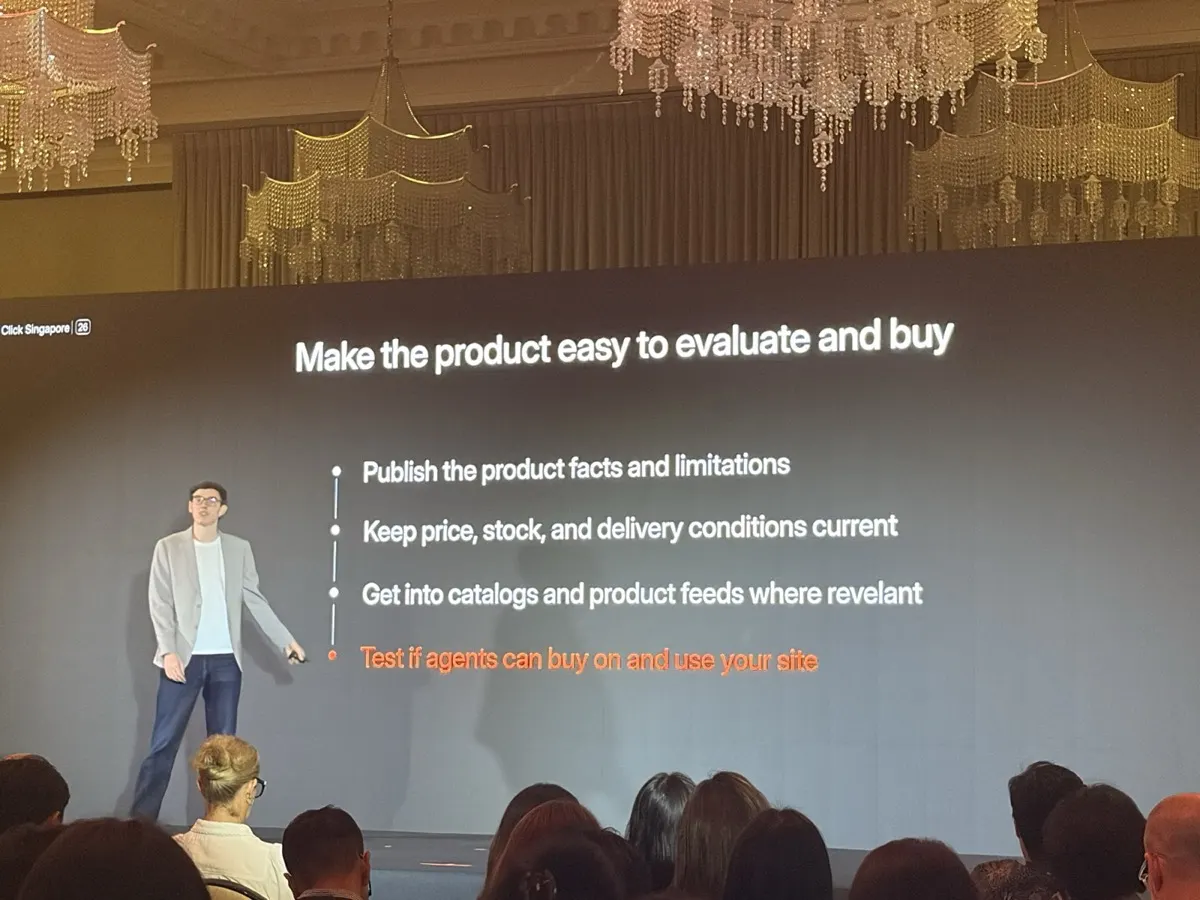
His checklist: publish product facts and specs, keep price, stock and delivery visible to agents, get into shopping catalogues where relevant, and test your own buying process with an agent.
Product keynote: Dylan Babbs and the AI marketer
Co-founder and CTO, Profound. Live demo, scheduled 5:05pm.
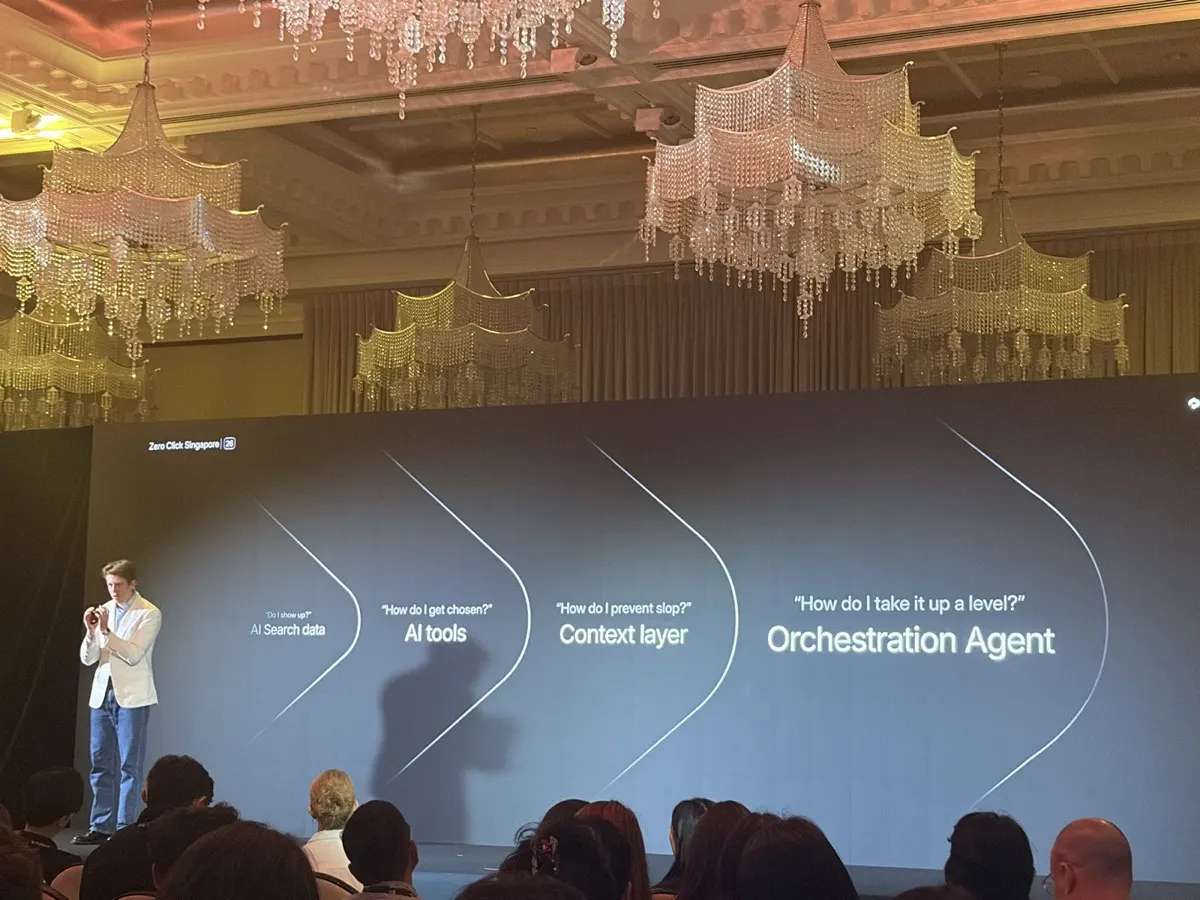
He played a marketer at Ramp, a fintech preparing to launch in Singapore. He opened on the stage most teams are at today: AI search data and AI tools, with the marketer still asking every question, then showed what Profound wants to replace it with.
- AIM, the AI marketer, now works inside Microsoft Teams, Slack and email. "You don't have to tag AIM or chat with it directly to get results from it. AIM is also proactive."
- In the demo, AIM had sat in on the team's expansion meeting and flagged the problem itself: Ramp appeared in 9% of AI answers to Singapore buying prompts, against 41% in the US, and engines described it as US-only.
- It ran a competitor audit across 280 buying prompts (Ramp ranked sixth of six), then turned the findings into an on-brand deck. "There's no need to take the data outside of Profound, put it into a different tool like Google Slides or Microsoft PowerPoint."
- It drafted a guide on Singapore's Goods and Services Tax (GST), a topic where Ramp was invisible, then suggested the next one on InvoiceNow by itself.
- After two similar tasks, it offered to build a "Singapore Content Gap Agent": every Monday at 9am it finds topics under 10% visibility, drafts guides, saves them as drafts and never publishes.
- Agents can run on a schedule or fire on events, such as a competitor publishing or a drop in AI visibility. "All you have to do is describe in natural language exactly what you want the agent to do."
- Also announced: Profound Slides, Creative Studio for on-brand images and video, and a mobile app coming soon.
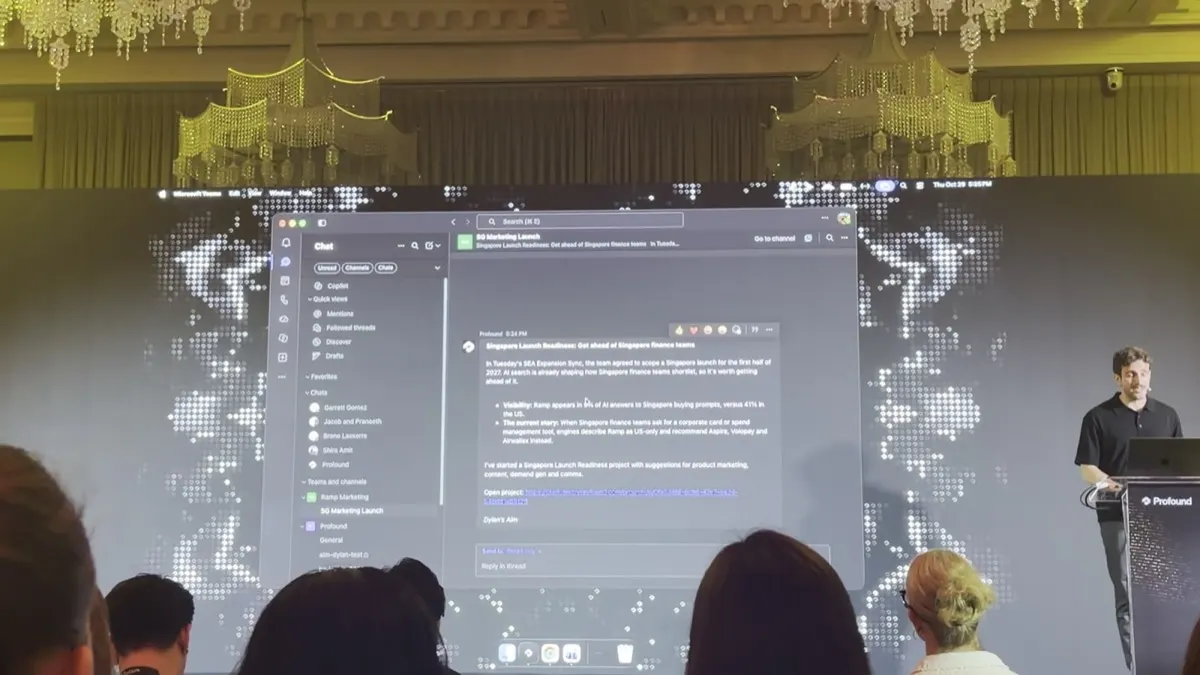
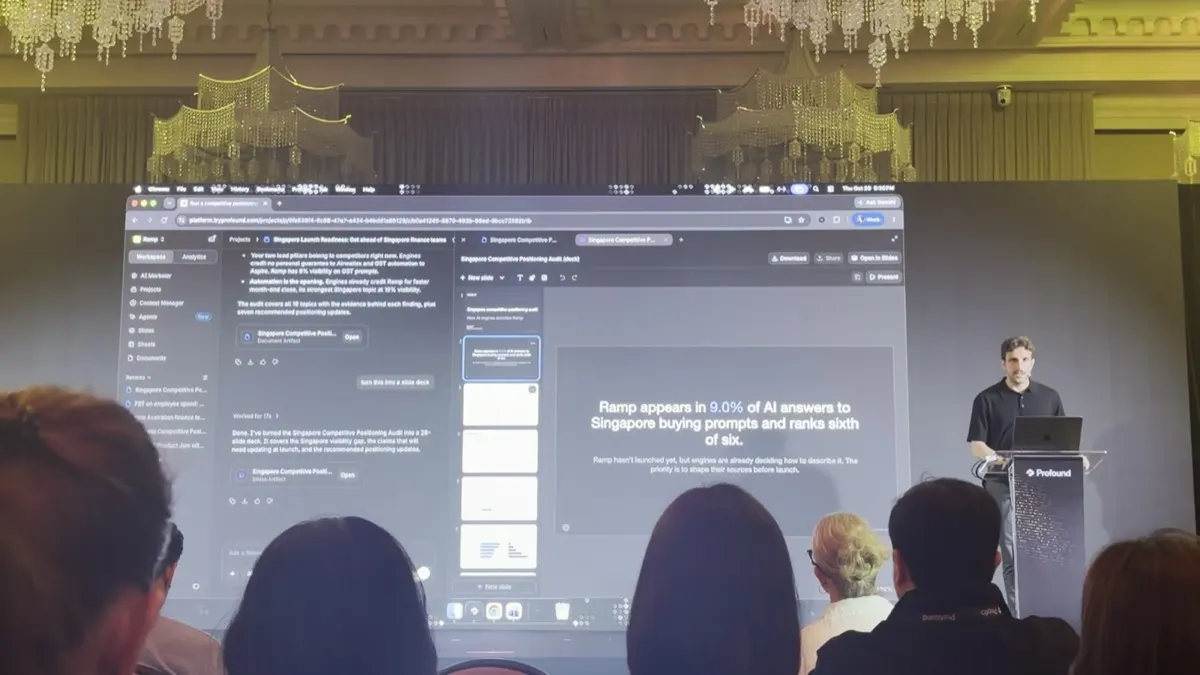
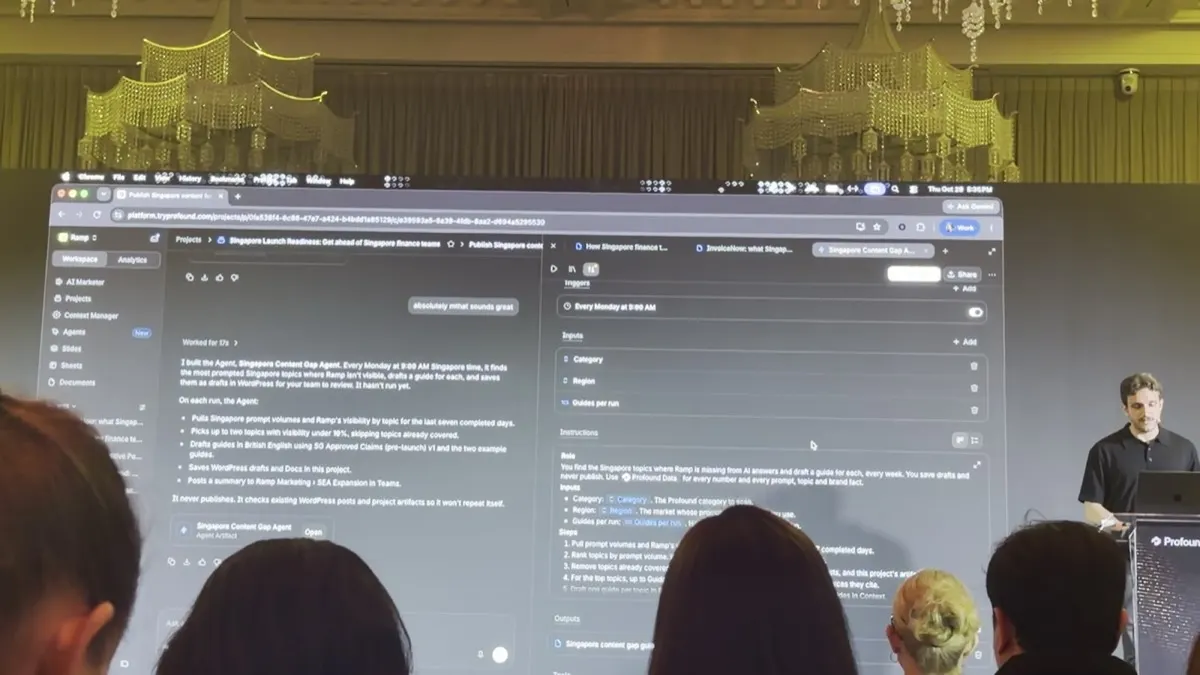
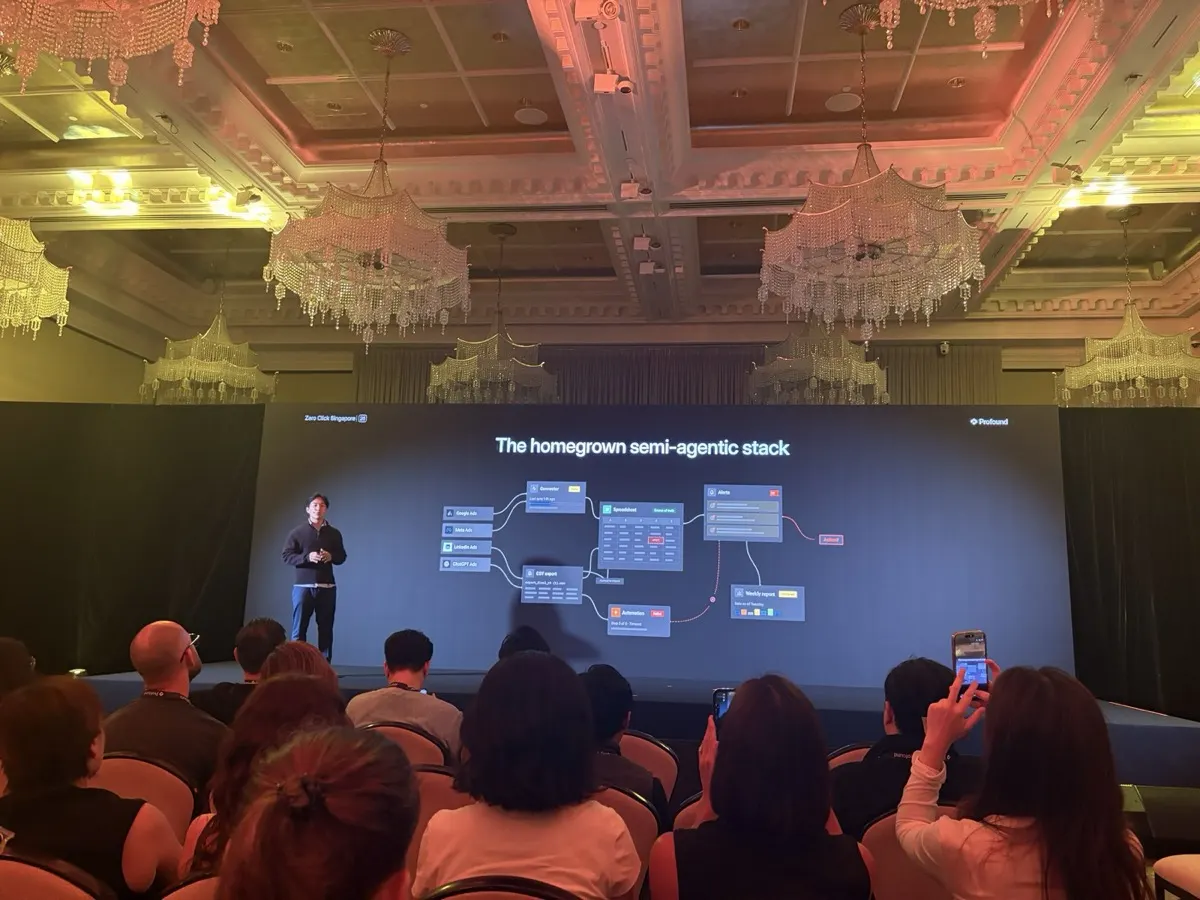
Profound Ads, presented by Matthew Huo, Profound's product marketing manager, extends AIM to paid media across Meta, Google, LinkedIn and ChatGPT. His talk opened on a slide titled "The homegrown semi-agentic stack": ad platforms, exports, spreadsheets and alerts connected by hand. Profound Ads sends a daily brief of issues and ideas, and the marketer approves before AIM acts.
Profound sits in a crowded category of AI visibility trackers. Our comparison of AEO tools covers how it stacks up on tracking before you weigh the new agent features.
Enterprise view: Singtel and L'Oréal
Singtel
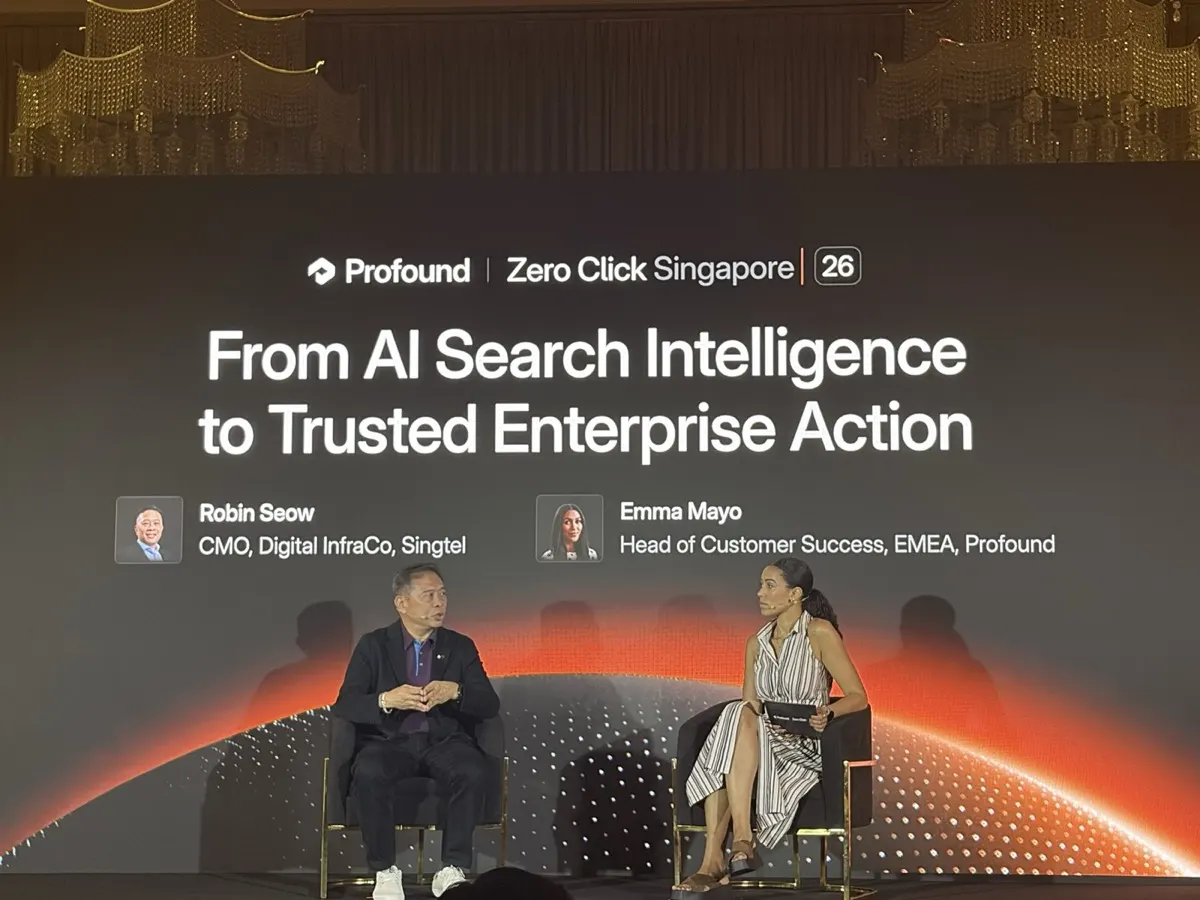
- Singtel's AI business is early with AEO on purpose. Demand already exceeds supply, so paying to create more demand makes no sense yet.
- Open questions for big companies: who owns AEO, how to tie it to business results, and keeping data inside the country. Singtel is working with Profound on sovereign AI cloud for Singapore.
L'Oréal
Lex Bradshaw-Zanger, Chief Business Capabilities and Innovation Officer for South Asia Pacific, Middle East and North Africa at L'Oréal, with Trevor Pyle, Profound's Head of Marketing.
- "AI adoption is very much a people challenge, it's not a tech challenge."
- "Measurement is very lazy at the moment," focused on the easy things.
- Marketers need both tech skills and brand basics.
How do we decode experience, taste and judgment, and re-encode it, so that younger marketers can have the grey hair and be leaders earlier in their career?
Lex Bradshaw-Zanger, L'Oréal, lightly edited from the recording
My take after the day
AIM, Profound's AI marketer, is early and still keeps a human in the loop. Adoption speed differs by region, so the go-to-market playbook will need to differ too.
Naturally, I wondered how it would fare against my own AI marketer, which I now get to call a "home-grown, semi-automated workflow". The launches will land well in agentic-forward markets. Those marketers like speed and convenience, yet what they actually grade is how smart and accurate the work is. A polished stage demo cannot show that. It only shows up on a real brief.
Credit where it is due: a great event, and congratulations to the Profound team for filling the room with the right people. I met AI-forward agency partners, go-to-market leaders from big tech, and fellow AI-native founders running start-ups like mine.
After one great day, there is no winner yet. My main takeaway is that Profound wants to own agentic marketing. I am curious how far that ambition travels. Digital marketing already taught us that centralised resources let fewer people create more impact, and agentic marketing pushes that further. Meanwhile, creative craft and real-world touchpoints, like the ballroom we all sat in, gain value. Great marketers orchestrate between the two. I have not seen anyone take over that job yet, Profound's AIM agent included.
Where I expect AIM to shine is demand capture and amplifying distribution. Demand generation and awareness still run on craft, creativity, trust, brand and human connection, and no dashboard can approve those on your behalf.
I have had this conversation with marketers and agencies across many markets, and we largely agree. The harder question is whether brands can steer through the change while finance keeps asking for one more round of cost optimisation. Steering that is the job of the marketing leader and the CMO.
What's next
Profound announced Zero Click New York for April 2027, with 3,000+ people expected. They said everyone who attended in Singapore has a guaranteed ticket. Profound also said its Singapore office opens by the end of 2026. Recordings of the sessions are due on Zero Click Unlocked; Profound has not given a release date.
Frequently Asked Questions
What is Profound Zero Click Singapore?
Zero Click Singapore is Profound's in-person summit on AI search and AI marketing. The 2026 edition ran on 29 October 2026 at Raffles Singapore. It was free to attend and was the last stop of Profound's Zero Click world tour, after London and Sydney.
When and where was Zero Click Singapore 2026?
Thursday 29 October 2026, at Raffles Singapore. The talks ran from 2:30pm to 6:20pm, with networking before and a cocktail reception after.
Who spoke at Zero Click Singapore 2026?
Speakers included James Cadwallader (co-founder and CEO), Nick Lafferty (founding marketing engineer), Josh Blyskal (researcher) and Dylan Babbs (co-founder and CTO) from Profound, plus Nauman Bashir of Standard Chartered, Arnab Sen of iQuanti, Robin Seow of Singtel and Lex Bradshaw-Zanger of L'Oréal.
What did Profound announce at Zero Click Singapore?
Dylan Babbs showed AIM, Profound's AI marketer, now working inside Microsoft Teams, Slack and email and suggesting tasks on its own. He also showed Profound Slides, agents written in plain language that run on a schedule or on events, Creative Studio for on-brand images and video, and a mobile app coming soon. Profound Ads extends AIM to paid media. Profound also said its Singapore office opens by the end of 2026 and announced Zero Click New York for April 2027.
What is AIM from Profound?
AIM is Profound's AI marketer. In the Singapore demo it sat in on a team meeting, flagged that the demo brand Ramp appeared in 9% of AI answers to Singapore buying prompts, ran a competitor audit across 280 prompts, turned it into a slide deck, drafted guides on topics where Ramp was missing, and offered to set up a weekly agent that saves drafts and never publishes. A human approves before it acts.
What does it mean that ChatGPT became an evaluation engine?
Profound researcher Josh Blyskal said that before 8 August 2026 ChatGPT relied on existing evaluations such as listicles, comparisons and reviews. After that date it builds its own evaluation from tests, product facts and documentation. Profound's research says ChatGPT now cites commercial pages 35% more and specs and docs 84% more, while citing listicles 38% less and social posts 91% less.
What did Standard Chartered say about AI accuracy?
Nauman Bashir said the bank tested more than 5,000 prompts and found wrong answers across AI platforms, such as a 4% rate quoted for a 5% product. Most errors traced back to the bank's own content, such as old terms and conditions. His closing slide read: being cited gets you into the answer; being correct earns the trust.
What are Muse and Instinct?
They are personal AI agents that Josh Blyskal used as examples of agents that evaluate and buy for the user. He described them as proactive, action ready and context loaded. He said Muse launched on 8 September and reached Singapore on 28 October.
Are the Zero Click Singapore sessions available to watch?
Profound says available recordings are shared through Zero Click Unlocked after each event, and asks viewers to check Unlocked for release dates.
When is the next Zero Click event?
Profound announced Zero Click New York for April 2027, with more than 3,000 people expected, and said everyone who attended in Singapore has a guaranteed ticket.
Sources
- Profound, Zero Click Singapore 2026 event page: speakers, titles and published agenda.
- Profound, Zero Click Unlocked: where Profound shares session recordings.
- Tina Chu, recording and transcript of the Zero Click Singapore talks, Raffles Singapore, 29 October 2026.
- Tina Chu, slide photos and two videos of the product keynote demo, 29 October 2026.
Is AI describing your brand correctly?
Run your brand through our free AEO audit to see which AI engines cite you and what they say about you.