// ARTICLE
Best AEO Tools & Trackers for 2026: My Complete Agentic Toolstack
I rarely open tool UIs anymore. My AEO workflow runs through Claude Code, connecting to DataForSEO, Ahrefs, and Google Search Console via MCP servers and APIs. This is the complete toolstack I run as a practitioner who has gone all-in on agentic workflows.
Tina Chu
Founder & AEO Strategist

// KEY_TAKEAWAYS
- Top pick for AEO operators: Claude Code: MCP-native, agentic workflow execution, 60-80% of an AEO team's leverage in one tool.
- Top pick for AI citation tracking: WorkDuo, purpose-built for monitoring brand mentions across ChatGPT, Perplexity, Google AI Overview.
- Top free option: Google Search Console, still the foundation that AEO sits on top of.
- Tools that lost their moat in 2026: any SEO suite without API access. MCP integration changed which tools actually fit modern AEO workflows.
- New unit of optimization: query fan-out simulation (Lily Ray, Oct 2025). Free tools: aicoverage.locomotive.agency, queryfanout.ai.
// METHODOLOGY_DISCLOSURE
Written by Tina Chu, Founder of Novastacks. I've used each of the tools listed here across 80+ AEO audits and 12 months of client engagements in 2025-2026. This list is unsponsored, no affiliate links, no vendor relationships influencing the ranking. Tools are ranked by how much leverage they provide to a senior AEO operator running an agentic workflow, not by feature count or marketing reach. Updated September 8, 2026: the enterprise picks now live on a dedicated page, linked from the by-company-type section below, leaving the stack summary here. Updated August 2, 2026 with Bing Webmaster Tools, the structured data validators and the AI visibility tracker comparison, following the June 11 picks by company type (SaaS, SMB, enterprise, AI products) and the May 8 additions of query fan-out tools and APAC multi-engine guidance.
// TOOLSTACK_OVERVIEW
My AEO Toolstack (Quick Overview)
| Tool | How I Use It | Cost | Rating |
|---|---|---|---|
| 1. Claude Code | My operating system, orchestrates all other tools via MCP | $$ | 10/10 |
| 2. WorkDuo | Single source of truth for AI visibility tracking | $$$ | 9/10 |
| 3. DataForSEO MCP | LLM mentions, SERP data, keyword research, via API | $$ | 9/10 |
| 4. Ahrefs MCP | Domain authority, backlinks, competitor analysis, via API | $$$$ | 9/10 |
| 5. Google Search Console | AI Overview tracking, click data, via MCP | Free | 8/10 |
| 6. Bing Webmaster Tools | AI grounded query reporting, IndexNow recrawl | Free | 8/10 |
| 7. Screaming Frog | Technical audits, schema validation | $$ | 8/10 |
| 8. Rich Results Test + Schema Validator | Structured data validation before and after publishing | Free | 8/10 |
| 9. Canva AI | Blog banners, social graphics, brand visuals | $ | 8/10 |
| 10. HeyGen | AI avatar videos, multilingual content | $$ | 8/10 |
| 11. Nano Banana | Text-to-video, image-to-video generation | $$ | 7/10 |
| 12. Custom Reddit Tools | Community management, trend monitoring | n/a | 7/10 |
Cost: Free | $ = Budget | $$ = Mid-tier | $$$ = Premium | $$$$ = Enterprise
* Currently testing additional tools, will update this list as I evaluate them.
// THE_SHIFT
Why I Stopped Using Tool UIs
Here's the shift that changed everything: I rarely log into Ahrefs, DataForSEO, or even Google Search Console anymore. Instead, I talk to Claude Code, and it queries these tools for me through MCP (Model Context Protocol) servers and APIs.
The Old Way vs. The Agentic Way
Before (Manual):
- Log into Ahrefs → export keywords
- Log into GSC → pull click data
- Log into WorkDuo → check LLM mentions
- Combine in spreadsheet → analyze
- Write report → format for client
Now (Agentic):
- Tell Claude: "Run AEO audit for [client]"
- Claude queries all tools via MCP
- Claude analyzes, identifies issues
- Claude generates client-ready report
- I review and approve
This isn't just about saving time (though I save 10+ hours per week). It's about operating at a higher level of abstraction. Instead of clicking through UIs to find data, I describe what I need and the system assembles it.
The tools below are what I actually use in my agentic workflow, some via MCP servers, some via APIs, and a few that still require direct interaction.
// EVALUATION_CRITERIA
How I Evaluate AEO Tools
This isn't a listicle scraped from marketing pages. These are tools I use daily across real client projects, evaluated against the same question every client eventually asks: how to measure whether these tools work. My criteria:
What Makes a Tool Worth Using:
1. API/MCP compatibility
- Can I access it programmatically?
- Does it fit into my agentic workflow?
2. Data accuracy
- Does it match manual verification?
- How fresh is the data?
3. Unique data
- Does it provide something I can't get elsewhere?
- Is it the source of truth for something specific?
4. Value for money
- ROI based on time saved and insights gained
- Can I use it across all clients?
My background: 20+ years scaling growth at Tencent and Expedia. Now running AEO campaigns for B2B SaaS clients, managing 10,000+ keywords across multiple industries.
// TOOL_DEEP_DIVES
Claude Code: My Operating System
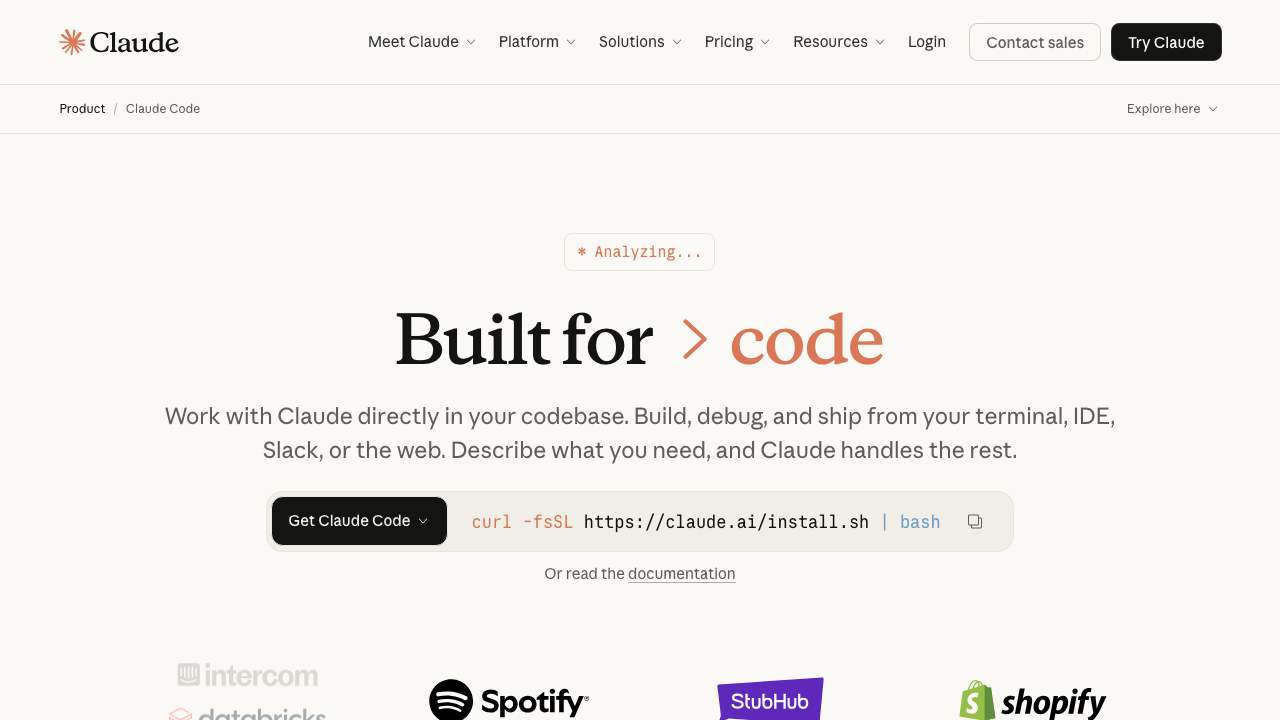
What it is: Claude Code is Anthropic's CLI tool that connects Claude (the AI) to your local environment. But I've turned it into something more, it's my operating system for all AEO work.
Through MCP (Model Context Protocol) servers, Claude Code connects directly to DataForSEO, Ahrefs, Google Search Console, Google Sheets, and more. I run audits, pull data, generate reports, all through natural language commands.
Example workflow:
"Pull last 30 days of GSC data for our B2B SaaS client, cross-reference with Ahrefs rankings, identify pages losing traffic but maintaining position, and create a brief for content updates."
Why I Love It
- MCP servers connect to any API-accessible tool
- Custom agents for specialized workflows
- Handles multi-step research autonomously
- Generates client-ready deliverables
Limitations
- Requires technical setup (MCP configuration)
- Learning curve for prompt engineering
- Dependent on API access to other tools
My Rating: 10/10. This is the foundation of everything else.
WorkDuo: Single Source of Truth for AI Visibility
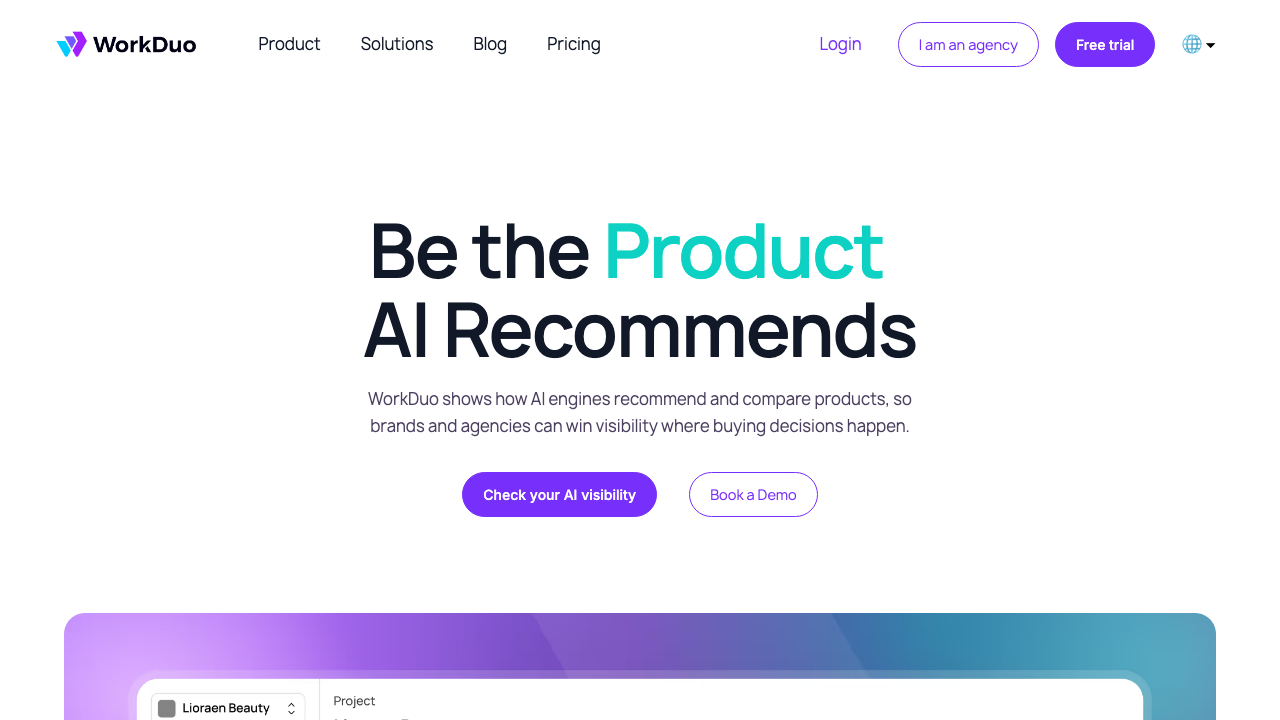
What it is: WorkDuo is my single source of truth for AI visibility tracking. It monitors brand mentions across ChatGPT, Perplexity, Google AI Overview, Gemini, and other LLMs, tracking how often your brand appears, what context it appears in, and which sources are driving AI responses.
Why it's essential: You can track SEO rankings with Ahrefs. You can track search performance with GSC. But tracking AI citations? That's WorkDuo's territory. It answers the question: "When someone asks an AI about [your industry], does it mention you?"
Key capabilities:
- Track brand mentions across 5+ AI platforms
- Identify which websites fuel AI responses about you
- Competitive analysis, who gets cited instead of you
- Flexible APIs for custom dashboard integration
- White-label options for agencies
Why I Use It
- Cross-engine citation tracking at real depth (ChatGPT, Perplexity, AI Overviews, Gemini)
- API-first, integrates with my workflow
- Looker Studio connector for dashboards
- Competitor visibility analysis
Considerations
- Premium pricing ($149/mo+ for real usage)
- Requires consistent tracking setup
- Best value at agency/multi-client level
My Rating: 9/10. Essential for serious AEO work.
DataForSEO MCP: The Backend Powerhouse
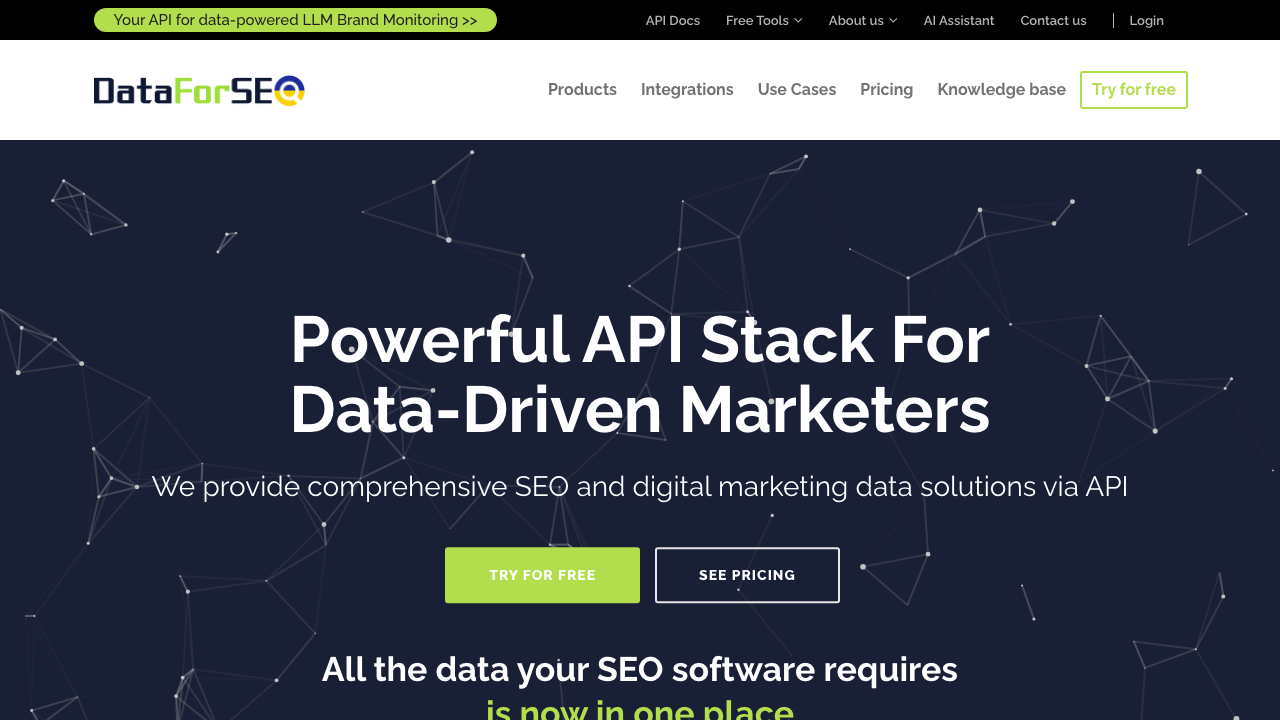
What it is: DataForSEO is an API-first data provider, SERP data, keyword research, backlinks, and critically, their AI Optimization API for LLM mention tracking. I access it entirely through their MCP server in Claude Code.
The AI Optimization API: This is their AEO-specific offering. It includes the ChatGPT LLM Scraper (collects AI model responses at scale), LLM Mentions API (tracks brand references across LLMs), and AI-enriched keyword data showing search volume by platform.
What I use it for:
- Bulk keyword research with AI platform breakdown
- Competitive SERP analysis
- LLM mention tracking and sentiment
- Google AI Overview extraction
- Historical rank tracking
Why I Use It
- MCP server = direct Claude Code integration
- Pay-per-query model (no wasted credits)
- Same data source powering many SaaS tools
- AI Optimization API for LLM-specific insights
Considerations
- No UI, pure API (which I prefer)
- Requires MCP setup or coding knowledge
- Usage-based pricing can scale up
My Rating: 9/10. Core data infrastructure.
Ahrefs MCP: Authority & Backlink Intelligence
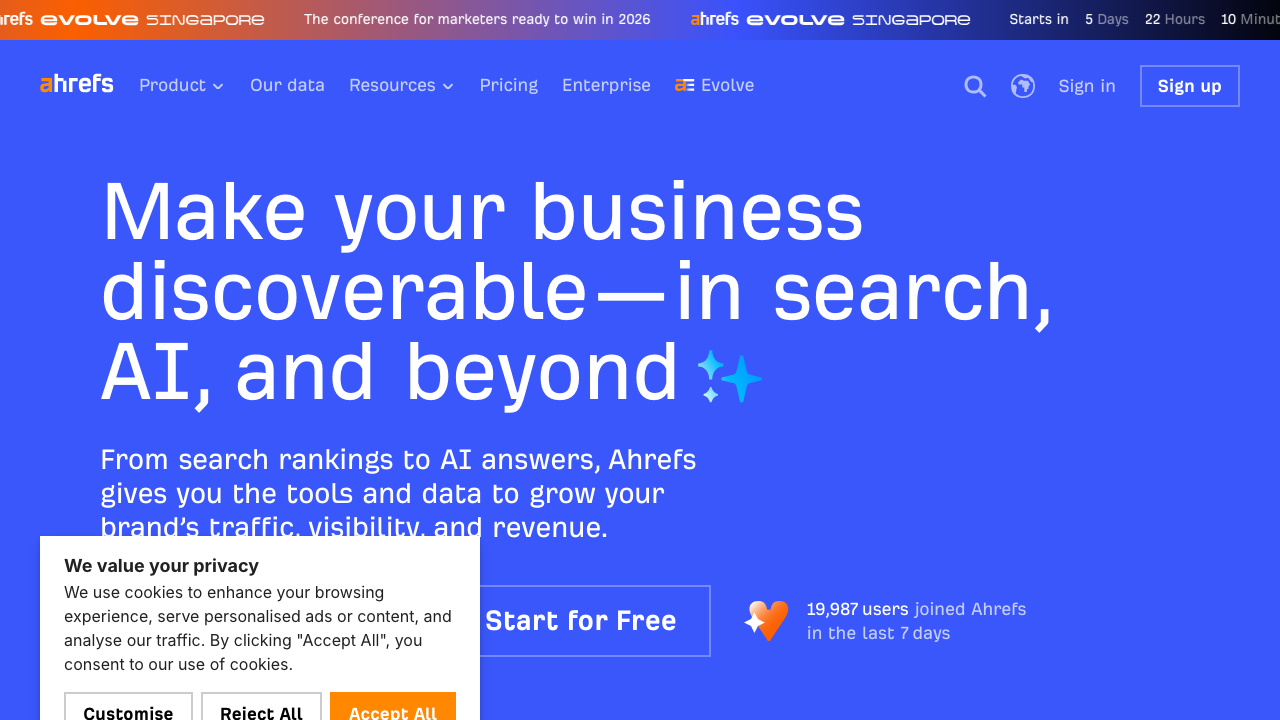
What it is: Ahrefs needs no introduction, it's the industry standard for backlink analysis, domain authority, and competitive SEO research. What's new: they have an official MCP server, which means I access Ahrefs directly through Claude Code.
Why it matters for AEO: AI models heavily weight authoritative sources, part of what actually drives AI citations beyond just clear answers. Sites with strong backlink profiles get cited more. Ahrefs tells me which clients have the authority foundation for AEO success, and which competitors we need to outperform.
What I use it for:
- Domain Rating (DR) for authority benchmarking
- Backlink analysis and gap identification
- Competitor keyword overlap
- Top pages analysis for content strategy
- Batch URL analysis across client sites
Why I Use It
- The reference backlink index and Domain Rating for authority analysis
- Official MCP server for direct Claude Code access
- Batch analysis for multi-site clients
- Keywords Explorer for content gaps
Considerations
- Higher price point ($129/mo+)
- MCP server requires paid plan
- SEO-focused (not AEO-specific)
My Rating: 9/10. Essential for authority analysis.
Google Search Console: The Free Foundation
What it is: Google's own data on how your site performs in search. I access it through a custom MCP server, pulling click data, impressions, CTR, and average position directly into Claude Code.
AEO relevance: GSC now shows AI Overview data, which queries trigger AI summaries and whether you appear in them. This is first-party Google data on how AI search affects your traffic.
Why I Use It
- Free first-party Google data
- AI Overview performance tracking
- MCP integration via custom server
- Indexing status and crawl insights
Limitations
- Google-only (no ChatGPT/Perplexity data)
- Data sampling on high-volume sites
- 16-month historical limit
My Rating: 8/10. Non-negotiable baseline.
Bing Webmaster Tools: The AI Grounding Goldmine
What it is: Microsoft's free counterpart to Search Console, and the most underrated item in this whole list. Its search performance reporting now includes AI performance data with the grounded queries behind generative answers: the actual questions where an AI answer pulled from your content.
AEO relevance: For AI answers this is more useful than Search Console's aggregate view, because it exposes the grounding layer itself. And since ChatGPT search grounds on Bing's index, Bing Webmaster Tools is the closest thing you get to first party data about one of the most important answer engines. When I refresh an article, I check the grounded queries here alongside the query fan-out in GSC before touching a single heading.
Why I Use It
- Grounded query reporting for AI generative answers
- Visibility into the index ChatGPT search grounds on
- IndexNow for instant recrawl after content updates
- Free, with keyword research included
Limitations
- Smaller classic search share than Google
- No MCP server yet, so pulls are more manual
- Shorter reporting windows than GSC
My Rating: 8/10. The grounded query report alone earns its place.
Screaming Frog: Technical Audit Workhorse
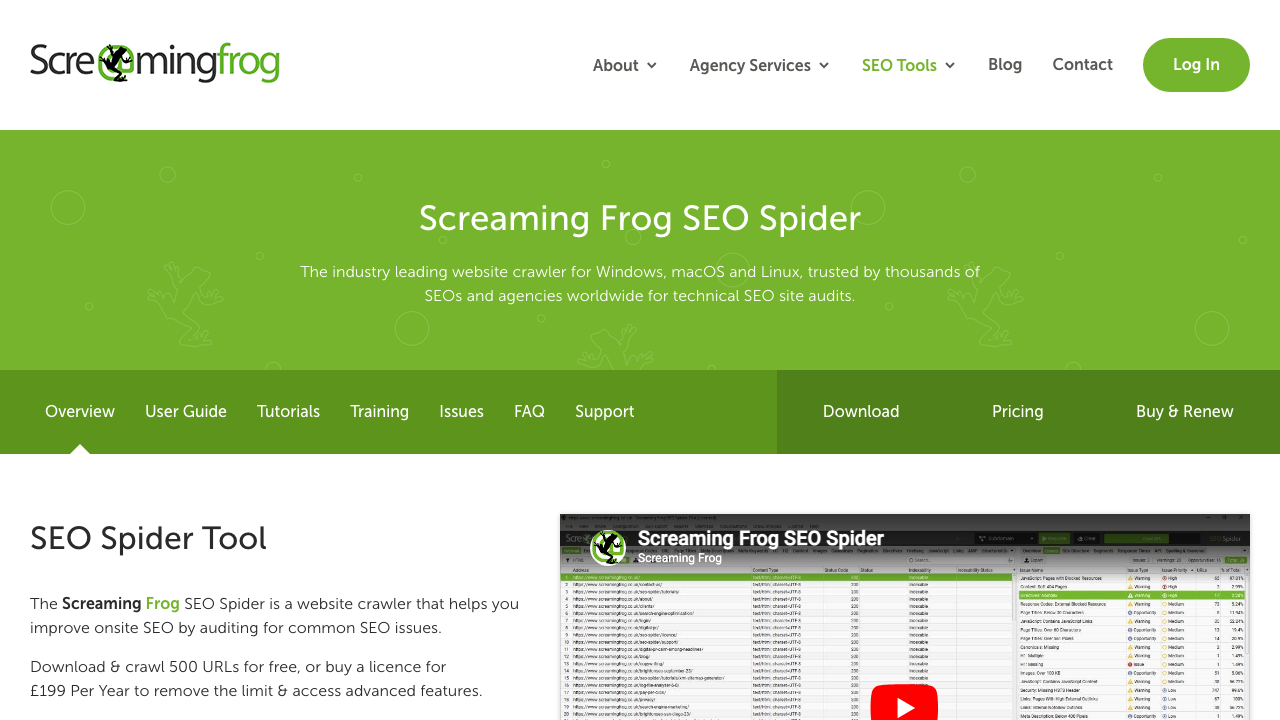
What it is: A desktop crawler that audits every technical aspect of a site, metadata, structured data, JavaScript rendering, broken links, redirects. This is the one tool I still use through its UI (though I export data to Claude for analysis).
AEO relevance: Schema validation is critical for AEO. Screaming Frog validates FAQ schema, Article schema, and other structured data that helps AI understand your content. It also identifies technical issues that prevent AI crawlers from accessing content, the technical checklist for how to make your site bot-friendly.
Why I Use It
- Most thorough technical crawling
- Schema.org validation built-in
- Server side and JavaScript rendering analysis
- AI integrations for analysis (OpenAI, Anthropic, Gemini)
Limitations
- Desktop app (not API-first)
- Manual export required
- Learning curve for advanced features
My Rating: 8/10. Essential for technical audits.
Rich Results Test + Schema.org Validator: Structured Data Validation
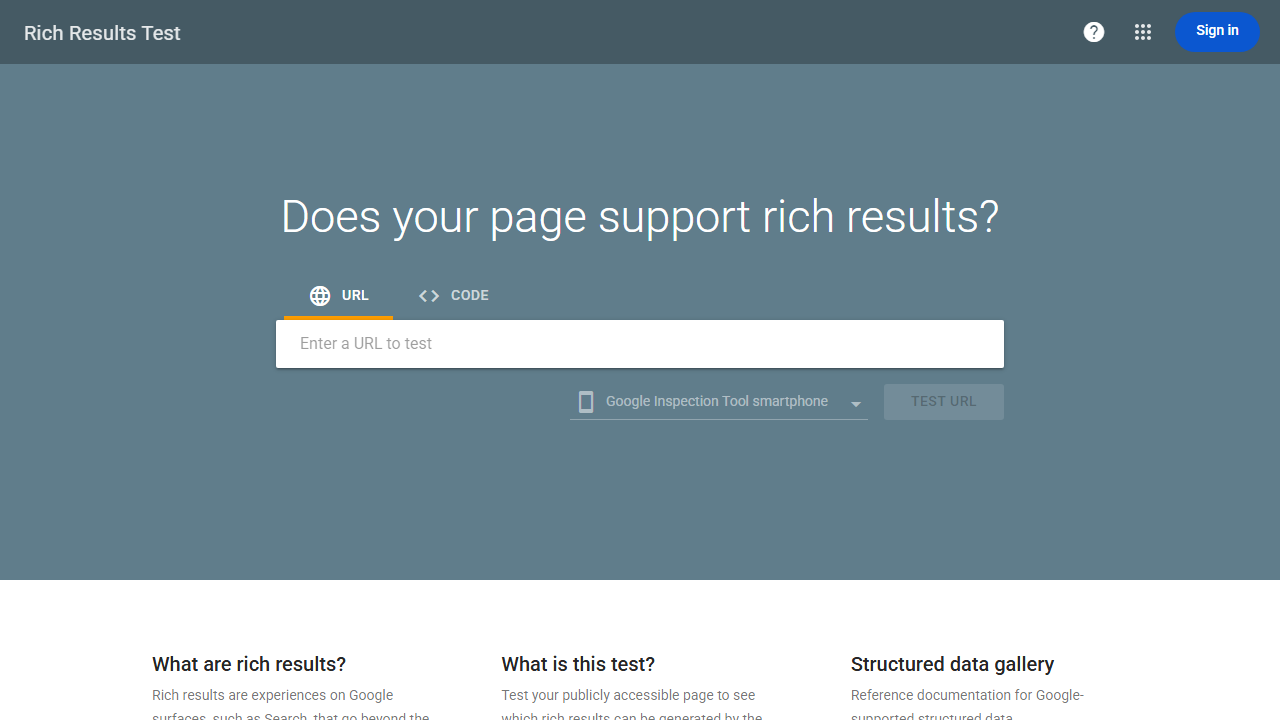
What they are: The two free validators every schema deployment should pass through before and after publishing. Google's Rich Results Test checks whether your structured data qualifies for rich results and shows what Google actually parses. The Schema.org Markup Validator checks any schema.org markup, including the types Google ignores, and catches the syntax errors that silently break a whole JSON-LD block.
The trap most teams fall into: Rich Results Test only reports rich result eligible types such as FAQPage, Product or SoftwareApplication. Organization, WebSite and WebPage will never appear there no matter how perfect the markup is. Teams see an empty result, assume their schema is broken, and start deleting valid markup. Validate eligibility in Rich Results Test, validate correctness in the Schema.org validator, and read the two results as answers to two different questions.
Why I Use Them
- Catch broken JSON-LD before the engines do
- Verify rich result eligibility per page type
- Validate the non-Google types AI engines still read
- Free, no account, instant
Limitations
- One URL at a time; bulk checks need a crawler
- Validation is not ranking; correct schema still has to earn citations
- The silence on Organization types confuses stakeholders
My Rating: 8/10. Non-negotiable checkpoints, zero cost.
// TRACKERS
AEO Trackers Compared: Which Tracking Tool Fits You
"AEO tracker" is the question I get most often, and the honest answer depends on budget and how hands-on you want to be. Whichever you pick, track every engine separately: in our 500-query study AI Search Isn't One Channel. It's Three., 94.2% of cited pages appeared in exactly one engine. This is how the tracking options stack up.
| Tracker | What it tracks | Best for | Cost |
|---|---|---|---|
| WorkDuo | Citations and mentions across ChatGPT, Perplexity, AI Overviews, Gemini, with source attribution | Agencies and serious in-house programs | $$$ |
| DataForSEO AI Optimization API | LLM mentions and AI model responses at scale, pay per query | Teams comfortable with APIs who want raw data cheap | $ |
| Google Search Console | AI Overview appearance within Google only | Everyone, as the free baseline | Free |
| Bing Webmaster Tools | Grounded queries behind AI generative answers on the Bing index | Everyone, especially for the ChatGPT search surface | Free |
| Novastacks AI Visibility Tracker | Whether the engines name your brand across 50+ real buyer prompts | Getting a first baseline without buying anything | Free |
If you have never measured AI visibility before, start free: run our AI visibility tracker for a baseline, check your grounded queries in Bing Webmaster Tools, then graduate to WorkDuo or the DataForSEO API once you know what you need to watch weekly.
// CONTENT_CREATION
Content & Visual Creation Tools
AEO isn't just data and audits, you need to create content that AI wants to cite. This is the stack I use for visual and video content.
Canva AI, Visual Content at Scale
Canva's AI tools (Magic Design, Magic Media, Dream Lab) let me create blog banners, social graphics, and branded visuals without a designer. The new Canva Design Model understands visual hierarchy and branding, not just image generation.
How I use it: Connected to my Brand Kit, Canva automatically applies fonts, colors, and tone. I generate multiple ad variants for testing, create blog featured images, and produce social media graphics, all on-brand.
Rating: 8/10
HeyGen, AI Avatar Video Production
HeyGen creates AI avatar videos with lip-sync, 175+ languages, and natural gestures. Their Avatar IV technology produces videos that are nearly indistinguishable from real recordings.
How I use it: Explainer videos, multilingual content localization, and quick video updates without scheduling shoots. API integration enables automated video generation from scripts.
Rating: 8/10
Nano Banana, Text/Image to Video
Nano Banana transforms text prompts or images into cinematic 1080p videos with strong temporal consistency. It's developer-friendly with SDKs for JavaScript and Python.
How I use it: Short promos, social media clips, and visual content where I need motion but not a full production. The multi-scene consistency is particularly useful for brand storytelling across clips.
Rating: 7/10
Custom Reddit Management Tools
Reddit increasingly influences AI training data and citations. I've built custom tooling for community monitoring, trend analysis, and engagement tracking, integrated into my Claude Code workflow.
How I use it: Monitor industry subreddits for question patterns, track competitor mentions, identify content opportunities that AI models are likely to pick up.
Rating: 7/10
// LANDSCAPE_SHIFT
The Tooling Landscape Has Changed
A year ago, I would have told you to buy Ahrefs, SEMrush, and a bunch of point solutions. Now? The game has fundamentally shifted.
MCP (Model Context Protocol) and agentic workflows have collapsed the moat around traditional SEO tools. If your tool has an API, I can probably access it through Claude Code without ever opening your UI. That means:
- Tools without unique data are becoming commoditized. If Ahrefs and DataForSEO give me similar backlink data, I'll use whichever integrates better with my workflow.
- API-first tools win. If I can't access it programmatically, it doesn't fit my workflow.
- Pricing models matter more. Usage-based APIs (DataForSEO) vs. high-tier plan requirements for API access (Ahrefs), the latter is harder to justify.
For B2B SaaS tools, this isn't "no moat", it's a new survival game. The tools that thrive will be those with truly unique data (WorkDuo's AI citation tracking), excellent API experiences, and pricing that doesn't punish programmatic access.
// AI_PROMPTS
AI Prompt Discovery and Tracking Tools
Keywords told you what people typed into Google. AI prompts tell you what buyers actually ask an assistant, in full sentences, and those are the questions your brand now has to show up inside. The first job is discovery: finding which prompts your buyers really use. The second is tracking: checking, per engine, whether you get named when someone asks them.
There is a mechanic worth knowing behind this. Ask an engine one question and it quietly generates a spread of related sub-questions, runs them all, and assembles the answer from whichever passages win. SEO analyst Lily Ray named this "query fan-out" in October 2025. The practical consequence: you can rank first for the headline phrase and still be absent from the answer, because the answer was built from sub-questions your content never addressed. Prompt discovery is how you find those sub-questions instead of guessing them.
Prompt Radar, by Novastacks (free tier)
Our own AI search discovery tool. It works out which buyer questions to track and then proves, per engine, whether your brand is cited in the answers. The paid method mines questions from sources public keyword tools cannot see (sales calls, support tickets, on-site search) and runs every candidate prompt against the live engines with location pinned to your market, scoring only whether you appear in the answer rather than merely being crawled as a source. The free tier gives you the discovery half: run your brand through the AI Prompt Discovery tool.
Demandsphere
Paid prompt and fan-out reporting at scale. Best for enterprise teams that need audits across hundreds of seed questions with workflow integration.
aicoverage.locomotive.agency (free)
Free simulator from Locomotive Agency. Paste a question and see the sub-questions an engine is likely to generate from it. A good starting point for a one-off audit.
queryfanout.ai (free)
Another free simulator. Useful for cross-checking against locomotive.agency to see which sub-questions both tools agree on.
NotebookLM (free, manual)
Manual approach: upload your content and prompt for the follow-up questions a buyer would ask. Useful when the dedicated simulators miss vertical-specific intent.
Workflow: start from the questions your buyers actually ask, not a keyword list. Discover the prompt set, check whether your site answers each one in a passage an engine can lift independently (FAQs, definitions, comparisons), fill the gaps, then track citation status per engine on a fixed prompt set so movement means the engines changed their mind, not that your list changed. GPT-5, per Ray, is "even more reliant on search grounding," so this spread is widening, not narrowing.
// APAC_TOOLING
Singapore & APAC: the multi-engine reality
Most AEO tool roundups assume a Western stack: ChatGPT, Perplexity, Google AI Overview, Gemini. APAC buyers research differently. Singapore SaaS companies serving Indonesia, Hong Kong, or the Philippines need to think about Bing Copilot (growing enterprise penetration via Microsoft's APAC partnerships), Doubao (ByteDance's LLM, dominant in China-adjacent markets), and KIMI (Moonshot AI). Manus is rising for agentic workflows in the region.
The tooling implication: Western citation-tracking tools (WorkDuo, BrandRank.AI, Profound) cover ChatGPT/Perplexity/Google AI well. Tracking Doubao or KIMI citations typically requires custom setup or APAC-specific tools. For most Singapore B2B SaaS clients, prioritize Bing Copilot tracking first (often missed by Western tools yet highly relevant to enterprise buyers using Microsoft 365), then add Doubao/KIMI tracking if your buyer journey includes Greater China markets.
Practical take: A US-headquartered AEO consultancy will typically miss 30-40 percent of an APAC buyer's AI search journey. APAC-native partners design citation tracking and content for the full regional AI search stack. See our ranking of the 9 best AI SEO and AEO agencies in Singapore for partner selection criteria.
// BY_COMPANY_TYPE
Best AEO Tools by Company Type: SaaS, SMB, Enterprise, AI Products
The ranking above assumes a senior operator running the full stack. Most teams are not that, so here is the same toolset re-cut by company type. Each pick comes from the tools already reviewed on this page; the difference is which subset earns its cost for your situation.
Best AEO tools for SaaS (2026)
SaaS buying runs on comparison prompts ("best [category] software for [use case]"), so citation tracking on a defined prompt set is the non-negotiable. Stack: WorkDuo for per-engine citation tracking, DataForSEO MCP for SERP plus LLM-mention data, Google Search Console for the AI Overview baseline. Add Claude Code when content production volume justifies orchestration. The KPI is citations on comparison prompts, not rankings.
Best AEO tools for SMBs (2026)
An SMB budget should not start with a paid tracker. Stack: Google Search Console (free) for the search foundation, manual monthly prompt checks in ChatGPT and Perplexity for citation sampling, plus the free fan-out checkers (aicoverage.locomotive.agency, queryfanout.ai). Run our free AEO audit for a per-engine baseline before paying for anything. Graduate to DataForSEO when manual sampling stops scaling. Still weighing DIY tools vs hiring an AEO agency? That comparison breaks down the tradeoff by budget.
Best AEO tools for enterprise (2026)
Stack: WorkDuo for multi-market citation tracking, Ahrefs for authority intelligence the citations depend on, Screaming Frog for technical audits at site scale, DataForSEO for raw SERP plus LLM data the analytics team can warehouse. For APAC enterprises, add Bing Copilot tracking first. Full breakdown in best AEO tools for enterprise.
Best AEO tools for AI products (2026)
AI products face the hardest version of the problem: their buyers ask AI assistants about AI tools, and those category prompts are crowded with well-funded competitors. Stack: query fan-out simulation first (the category prompt space moves monthly), WorkDuo on a wide prompt set, plus DataForSEO LLM-mention tracking to catch which third-party listicles the engines actually cite. Off-site placement in those cited roundups moves the needle more than on-page work in this segment.
Looking for a Singapore or APAC partner to operate this stack?
Our ranked comparison of the 9 best AI SEO and AEO agencies in Singapore (2026) includes detailed profiles of the top five, methodology disclosure, and the questions to ask before signing.
View the agency ranking// CONTINUE_THE_AEO_STACK
Don't want to run these tools yourself?
If you'd rather have a senior operator at Novastacks run this stack on your brand, our cluster covers the full picture:
- → The 9 Best AI SEO & AEO Agencies in Singapore (2026): ranked comparison of agencies that run these tools at scale.
- → AEO for Healthcare in Singapore & APAC: vertical playbook with 6 published clinic audits as evidence.
- → AEO Audit Library: 16 published brand audits run with this exact toolstack.
- → AEO vs GEO vs SEO vs AIO: definitions and methodology behind the workflow these tools enable.
// FAQ
FAQ: AEO Tools
What are the best tools for AEO in 2026?
The best AEO toolstack in 2026 centers on agentic workflows. Claude Code serves as the operating system, connecting to WorkDuo (AI visibility tracking), DataForSEO MCP (SERP and LLM data), Ahrefs MCP (authority analysis), Google Search Console (AI Overview data) and Bing Webmaster Tools (AI grounded queries), with Rich Results Test and the Schema.org validator checking every schema deployment. The key shift is accessing tools via APIs and MCP servers rather than logging into separate UIs.
What is MCP and why does it matter for AEO?
MCP (Model Context Protocol) is a standard for connecting AI assistants to external data sources. It allows tools like Claude Code to directly query Ahrefs, DataForSEO, Google Search Console, and other services via their APIs. For AEO practitioners, this means you can run audits, pull data, and generate reports through natural language commands instead of logging into multiple tool UIs.
What is the best tool for tracking AI citations?
WorkDuo is currently the most comprehensive tool for tracking AI citations. It monitors brand mentions across ChatGPT, Perplexity, Google AI Overview, and Gemini, tracking citation frequency, context, and source attribution. DataForSEO's AI Optimization API also offers LLM mention tracking at a lower price point if you're comfortable with API access.
Do I need Ahrefs for AEO?
Ahrefs provides valuable authority and backlink data that influences AI citations, highly authoritative sites get cited more. However, DataForSEO offers similar backlink data at lower price points with better API access. If Ahrefs keeps MCP access limited to highest-tier plans, many practitioners may switch to alternatives. Evaluate based on your specific needs and budget.
How much does an AEO toolstack cost?
AEO toolstacks range from budget-friendly (Claude Pro + DataForSEO + GSC) to premium (adding WorkDuo for AI visibility) to agency-level (multi-client tracking). The key insight: agentic workflows often reduce total tool spend by eliminating redundant subscriptions, you access multiple data sources through one orchestration layer rather than paying for separate UIs.
Is there a free AEO tracking tool?
Yes, three worth using. Google Search Console shows your AI Overview appearances inside Google. Bing Webmaster Tools shows the grounded queries behind AI generative answers, which also reflects the index ChatGPT search uses. And our own free AI Visibility Tracker checks whether the engines name your brand across 50+ real buyer prompts. Paid trackers add depth and scheduling, but the free layer is enough to establish a baseline.
What's the difference between AEO tools and SEO tools?
SEO tools track keyword rankings, backlinks, and Google search visibility. AEO tools track AI citations, how often and in what context AI systems mention your brand. Many tools serve both purposes: DataForSEO provides SERP data (SEO) and LLM mention tracking (AEO). WorkDuo is AEO-specific. The lines are blurring as more SEO tools add AI visibility features.
// TESTING
What I'm Testing Next
The AEO tooling space is evolving fast. I'm currently evaluating several tools and will update this article as I form opinions:
- Additional AI visibility platforms: comparing against WorkDuo for depth and accuracy
- Alternative backlink tools: evaluating DataForSEO backlinks vs. Ahrefs (API pricing is a factor)
- New video generation tools: the space is moving fast, testing several options
Last updated: July 5, 2026
// CONCLUSION
The Bottom Line
The biggest shift in my AEO practice isn't any single tool, it's operating through an agentic workflow. Claude Code as my operating system, MCP servers connecting to data sources, custom agents handling specialized tasks.
- Claude Code is the foundation, everything else plugs into it
- WorkDuo is the single source of truth for AI visibility
- DataForSEO MCP handles bulk data at reasonable cost
- Ahrefs MCP for authority analysis (evaluating if the pricing is still worth it)
- GSC remains the free, non-negotiable baseline
- Bing Webmaster Tools adds the grounded queries behind AI answers, also free
- Rich Results Test + Schema.org validator gate every schema deployment before and after publishing
Tools amplify strategy, they don't replace it. Get the fundamentals right (clear answers, proper schema, authoritative content) before investing heavily in tooling, our complete guide to AEO covers that strategy layer in depth. But once you do invest, go agentic.
Skip the Tool Stack, We Run AEO For You
Don't want to manage tools and workflows yourself? We handle the entire AEO process, strategy, implementation, and reporting.
See Our AEO Services