AI Prompt Discovery Tools: How to Find the Prompts Your Buyers Ask AI
Keyword tools show what people typed into Google. These tools estimate what your buyers ask ChatGPT, Gemini and AI Overviews, and show the searches the engines run behind each answer.

Key Takeaways
- No tool sees real ChatGPT logs for your category. Every prompt list is an estimate built from search data, consumer panels, simulated fan-out or your own sessions.
- Query fan-out is why prompts matter. Google says AI Mode splits one question into subtopics and runs many searches at once, so pages are chosen per sub-question.
- Use the tools in two steps. A discovery tool builds the list of questions; a tracker then checks, per assistant, whether those answers name your brand.
- A free start is enough for a first set. Combine a domain based prompt generator, a fan-out simulator and your own Search Console and Bing data, then freeze 20 to 50 prompts per market.
What do AI prompt discovery tools do, and what can they not see?
Keyword tools tell you what people typed into Google and roughly how often. Nothing equivalent exists for ChatGPT, Gemini or Perplexity, so most teams guess a prompt list, track it for months, and only later find out their buyers ask different questions.
Short answer
AI prompt discovery tools estimate which questions buyers ask AI assistants about your category. They build that estimate from search data, prompts collected from consumer panels, simulated query fan-out, or your own assistant sessions. Use one to build your prompt list, then use a tracker to check which of those prompts name your brand in ChatGPT, Gemini, Perplexity, Copilot and Google AI Overviews.
No AI assistant publishes what its users type or how often. Each tool therefore works from a different source, and the source decides what the tool is good for.
| Tool type | Where its prompts come from | Good for | What it cannot tell you |
|---|---|---|---|
| Prompt databases with volume estimates | Collected prompts or licensed consumer panel conversations, scaled with the vendor's own model | Sizing topics and choosing which questions carry the most demand | Exact counts of what real users asked in your market |
| Domain based prompt generators | Your website, what it ranks for, and the competitors ranking beside you | A first list written in buyer language across funnel stages | How often each prompt is asked |
| Fan-out simulators | A language model asked to break your prompt into the searches it would run | Seeing the sub-questions your page has to answer | What a live assistant ran for a real user |
| Session inspectors | Your own ChatGPT sessions, read in your browser | The actual searches and sources behind answers you trigger yourself | Anything about prompts other people send |
| Your own search reports | Google Search Console queries and Bing Webmaster Tools AI Performance data | Evidence from your own site, free | Prompts where your site never appeared |
What is query fan-out?
Query fan-out is the way AI search engines answer one prompt by running many searches. The engine splits the question into subtopics, searches each one, and writes the answer from the passages those searches return.
Google described it when AI Mode launched in the United States on 20 May 2025: AI Mode "uses our query fan-out technique, breaking down your question into subtopics and issuing a multitude of queries simultaneously on your behalf." The same announcement said Deep Search in AI Mode "can issue hundreds of searches" (Google, AI Mode in Google Search: Updates from Google I/O 2025). Google's developer documentation adds that both AI Overviews and AI Mode "may use a 'query fan-out' technique", issuing "multiple related searches across subtopics and data sources" to develop a response (Google Search Central, AI features and your website, last updated 10 December 2025, checked on 19 November 2026).
ChatGPT works the same way when it searches the web. In Search Engine Journal on 18 August 2026, Lily Ray describes ChatGPT turning a prompt into its own background searches, running them in parallel and writing an answer from what comes back. She reports Chris Long of Nectiv's comparison of roughly 4,000 prompts: the average number of fan-out searches per prompt rose from 2.17 in his 2025 baseline to 7.61 on ChatGPT 5.6 Sol.
Fan-out changes how a page wins a citation. The engine looks for the best passage for each sub-question, so a page can rank first for the headline phrase and still be left out of the answer. In our One Deep Page per Question study, 89.6% of AI cited pages were cited for exactly one of 500 queries. Ray's own advice in the same article is to aggregate the fan-out searches you see into the core topics the engine keeps returning to, and to avoid building a page for every individual fan-out query.
The AI prompt discovery tools, compared
Seven tools cover the job, from a free prompt list to panel based volume data. The table gives the summary; each entry below uses the same six fields, taken from the vendor's own pages.
| Tool | Type | Data source | Starting price |
|---|---|---|---|
| 1. Novastacks AI Prompt Discovery (ours) | Domain based prompt generator | Your domain, its Google rankings and its competitors | Free |
| 2. Semrush Prompt Research | Prompt database with volume estimates | 317M+ AI prompts across Google AI Overviews, AI Mode, Gemini and ChatGPT | $99 a month (AI Visibility Toolkit) |
| 3. Profound Prompt Volumes | Prompt database with volume estimates | Licensed consumer panel conversations from ChatGPT, Gemini and Perplexity, statistically modelled | Custom (Enterprise) |
| 4. Otterly.AI Prompt Research | Prompt research inside a tracker | Not described on its pricing page | $29 a month (Lite, as of 9 November 2026) |
| 5. queryfanout.ai | Fan-out simulator | A grounded language model run by DEJAN AI | Free with Google sign in |
| 6. Locomotive AI Coverage tool | Fan-out simulator with page coverage scoring | A selectable language model plus semantic matching against your page | Free |
| 7. FanoutFox | Session inspector for ChatGPT | Your own ChatGPT sessions, read locally | Free |
1. Novastacks AI Prompt Discovery (our tool)
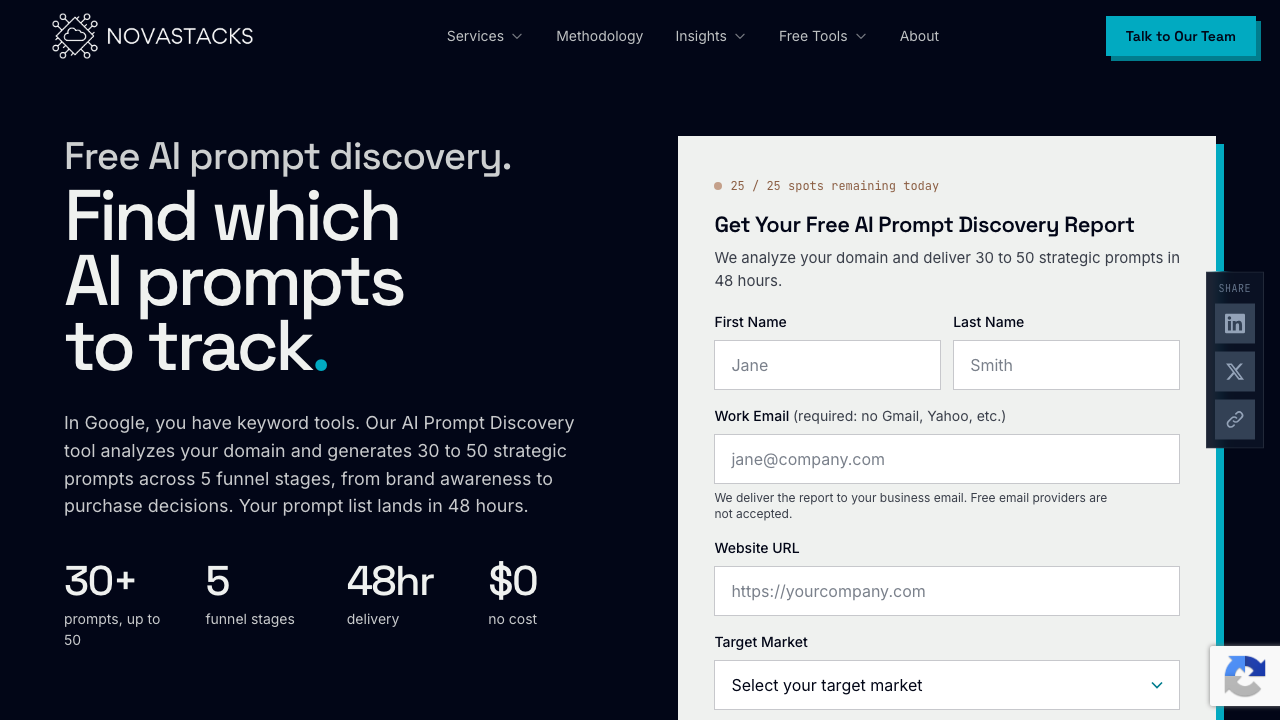
- What it does: Analyses your domain and sends you 30 to 50 buyer prompts within 48 hours, sorted into five stages: Branded, Awareness, Consideration, Decision and Blind Spots. The report also lists the brand, industry, competitors and keyword signals it detected.
- Data source: Your homepage, what your site already ranks for in Google, the competitors that rank for the same searches, and the features buyers look for.
- Price: Free, with no credit card. The report goes to a business email address.
- Best for: A first prompt set, written the way buyers phrase questions, to test by hand or load into any tracker.
- Limits: A one time check. It builds the list once and does not track or monitor answers afterwards, and it gives no volume numbers.
- Checked: 19 November 2026.
2. Semrush Prompt Research
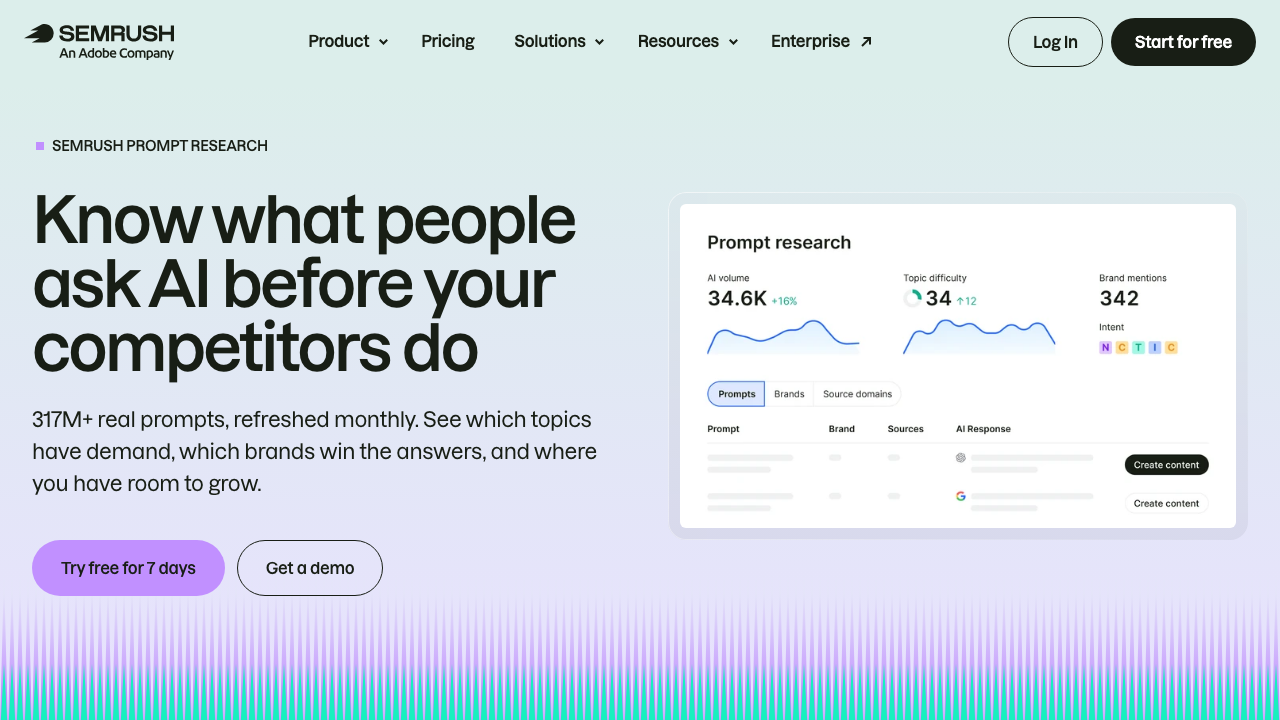
- What it does: You enter a topic, industry or product category and get related topics with an estimated AI Volume, an intent breakdown (informational, navigational, commercial, transactional and task), the brands mentioned in answers and the source domains cited. A prompts table shows each prompt with the full AI response, and any prompt can be sent to Prompt Tracking.
- Data source: Semrush's database of 317M+ AI prompts covering Google AI Overviews, AI Mode, Gemini and ChatGPT, with 42 geographic prompt databases.
- Price: Part of the AI Visibility Toolkit at $99 a month, which includes 1,000 daily queries in Prompt Research and 25 prompts in Prompt Tracking; 50 more tracked prompts cost $60 a month. The knowledge base says the toolkit has no free trial, while the feature page shows a 7 day free trial button.
- Best for: Teams already using Semrush who want prompt research beside their keyword research.
- Limits: AI Volume is Semrush's estimate. The feature page says the prompts are refreshed monthly; the knowledge base says daily on a rolling basis.
- Checked: 19 November 2026.
3. Profound Prompt Volumes
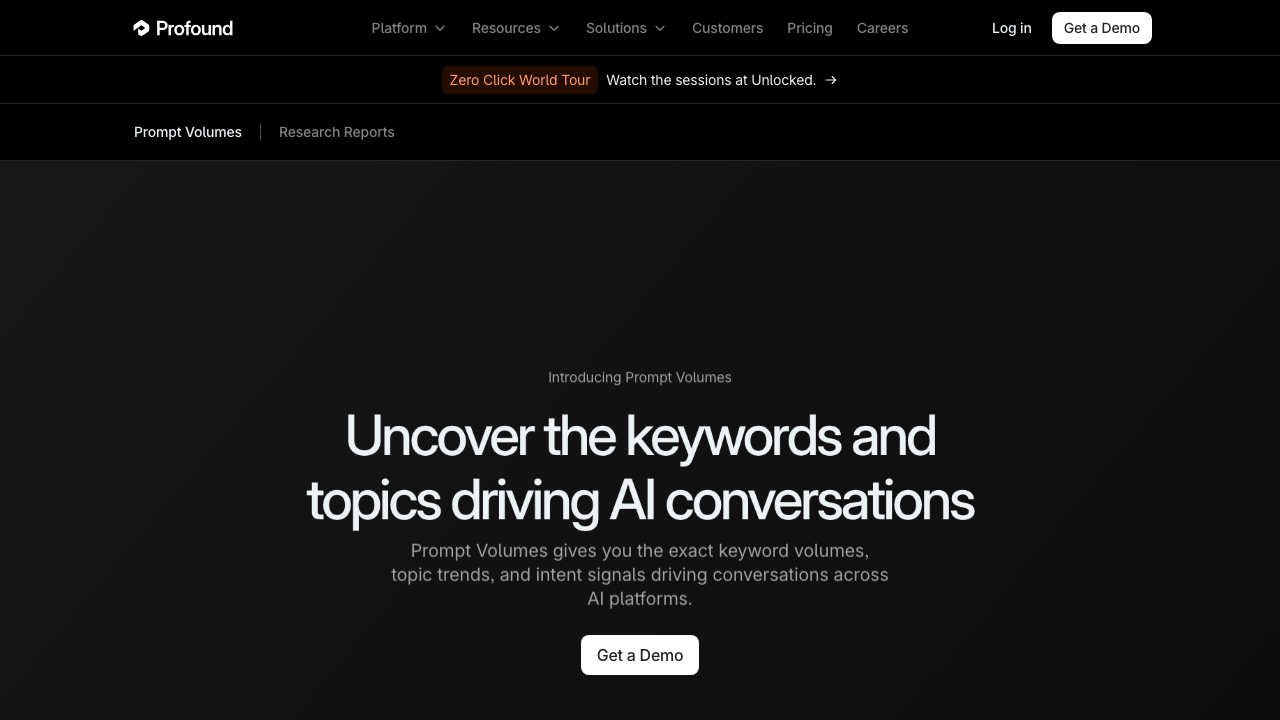
- What it does: You enter a keyword and see how its prompt volume changes over time, with intent classification, a keyword hierarchy and filters by platform, age range and income bracket. You can also search a URL slug to see the prompts that lead AI engines to cite that page, and order Prompt Research Reports built from what Profound calls 1.5 billion+ real AI conversations.
- Data source: Conversations licensed from double opt in consumer panels of ChatGPT, Gemini and Perplexity users, scaled with statistical modelling and refreshed weekly. The FAQ lists ten countries: the United States, Canada, Italy, Brazil, Germany, Australia, Spain, South Korea, France and the United Kingdom.
- Price: No public price. The pricing page lists Prompt Volumes under Enterprise as Custom; the help center lists bulk analysis of many keywords as an Enterprise feature.
- Best for: Enterprise teams that want panel based demand estimates by topic and audience.
- Limits: United States data starts in January 2025 and other regions in January 2026, and engine coverage varies by country. None of the ten countries in the FAQ is in Southeast Asia.
- Checked: 19 November 2026.
4. Otterly.AI Prompt Research

- What it does: Otterly.AI describes Prompt Research as a way to "find the prompts your buyers ask AI". Its pricing page lists an AI Prompt Research Tool and a Query Fan Out Tool in every plan, next to daily tracking of brand mentions and cited sources.
- Data source: Not described on the pricing page.
- Price: Lite $29 a month with 15 tracked prompts across ChatGPT, Google AI Overviews, Perplexity and Microsoft Copilot; Standard $189 with 100 prompts; Premium $489 with 400 prompts; Enterprise custom from 1,000 prompts. Annual billing is 15% off, and each plan offers a free trial (pricing as of 9 November 2026).
- Best for: Small teams that want prompt research and tracking in one low cost plan.
- Limits: Claude, Google AI Mode and Gemini are paid add-ons on every plan.
- Checked: Homepage 19 November 2026; pricing 9 November 2026.
5. queryfanout.ai
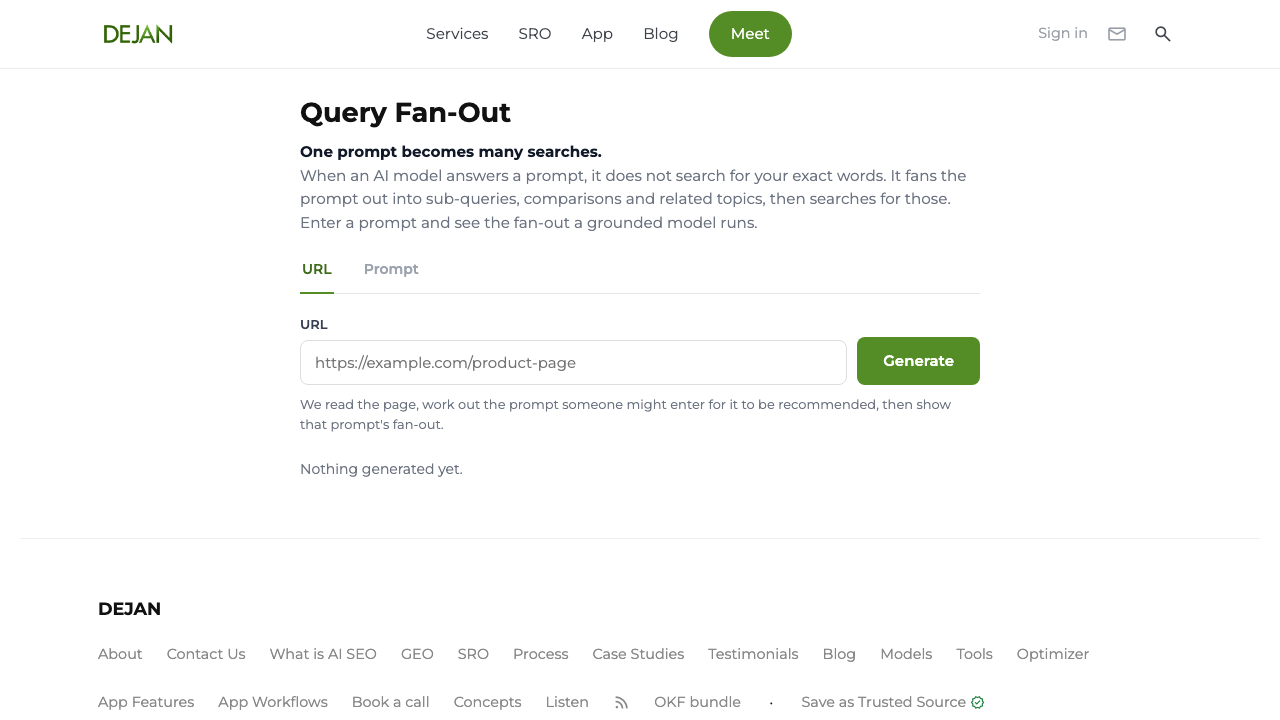
- What it does: Enter a prompt and it lists the searches a grounded model runs for it. Enter a URL instead and it reads the page, works out the prompt someone might type for that page to be recommended, then shows that prompt's fan-out. The prompt "best tools to find which prompts buyers ask ChatGPT" returned four sub-queries, including "tools to see what people ask chatgpt LLM prompts search volume".
- Data source: A language model run by DEJAN AI; the page does not name the model.
- Price: Free. After the first result it asks you to sign in with a Google account, which the page says filters out automated scripts.
- Best for: A quick look at the sub-questions behind one prompt or one page.
- Limits: A simulation of fan-out with no volume data; results can differ between runs.
- Checked: 19 November 2026.
6. Locomotive AI Coverage tool
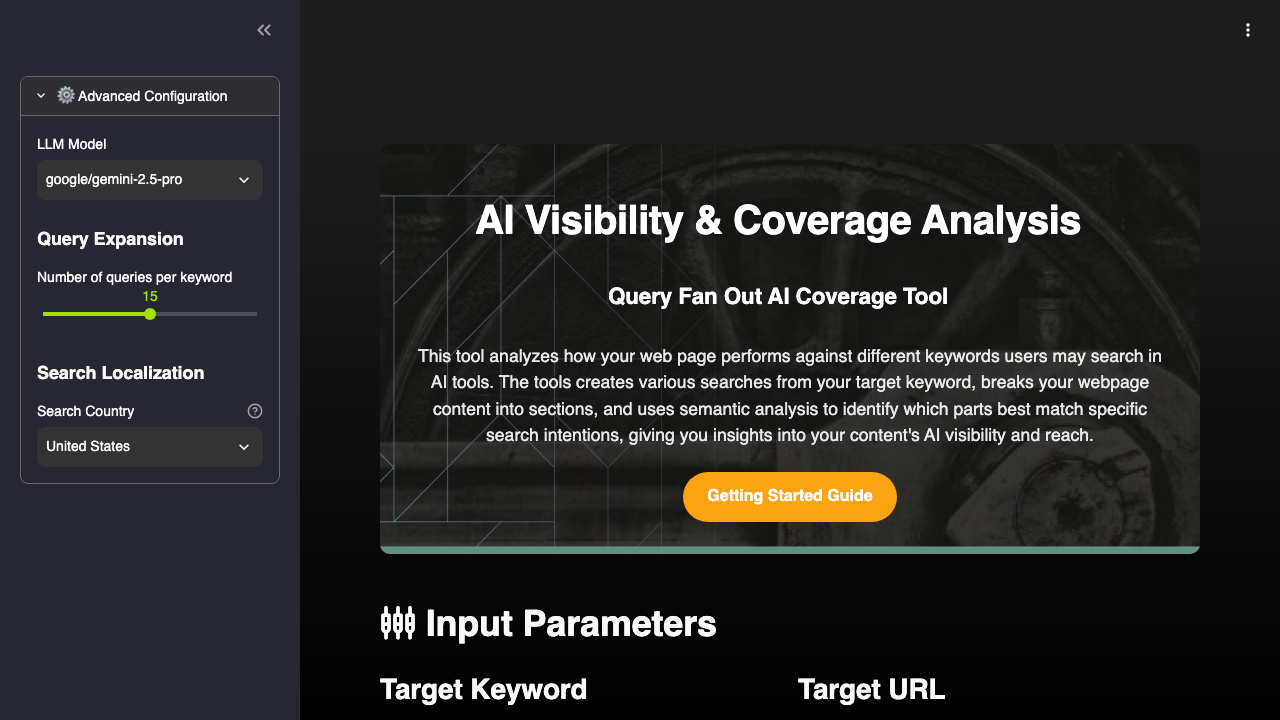
- What it does: You enter a target keyword and a target URL. The tool generates 5 to 25 searches from the keyword (15 by default), splits your page into sections and uses semantic matching to show which sections answer which searches. It can also compare your page with the top 3 to 5 search results and exports the scores as CSV.
- Data source: A language model you choose in the settings (Gemini 2.5 Pro by default) and the live page content, with a search country setting.
- Price: Free; developed by Tyler Gargula at LOCOMOTIVE Agency.
- Best for: Checking whether one existing page covers the sub-questions of the keyword it should win.
- Limits: One keyword and one page per run, and a run takes a few minutes. Generated searches can drift from your buyers' intent: for "ai prompt discovery tool" most of the 15 searches were about prompt libraries and marketplaces, so read the list before acting on the scores.
- Checked: 19 November 2026.
7. FanoutFox
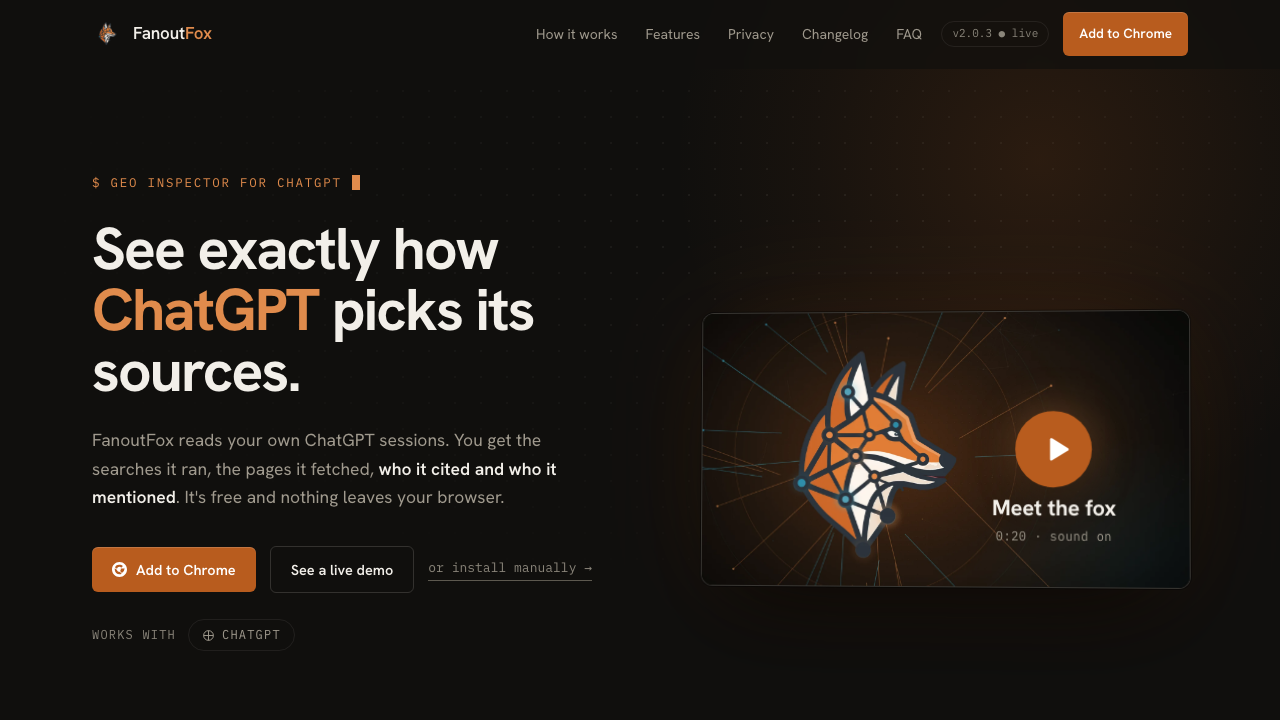
- What it does: A Chrome extension that reads your own ChatGPT sessions and shows the searches ChatGPT ran, the pages it fetched, which ones it cited and which brands it mentioned. You can pin an answer, run the same prompt later and compare the two.
- Data source: Your own ChatGPT sessions. Captures stay in your browser and are not uploaded.
- Price: Free, with no paid tier and no account; made by Suganthan Mohanadasan.
- Best for: Seeing the real fan-out behind the buyer prompts you run yourself.
- Limits: ChatGPT only; Perplexity capture was retired in version 2.0.0.
- Checked: 19 November 2026.
For a managed programme: Prompt Radar Pro
Prompt Radar Pro is part of our paid service and is not sold as a self serve tool. In The Novastacks Methodology it sits in the Decision layer and selects the buyer questions to track. Its inputs come from the Data layer, which combines first party signals such as sales calls, customer reviews and product information with search demand signals such as what buyers search for and which competitor pages rank. On international engagements it selects the questions in each market's language, and Proof Loop then tracks whether AI engines cite and recommend the brand.
How to build a prompt list without paying
A free stack gives you a first prompt set in an afternoon. Combine a generated list with evidence from your own accounts and a fan-out check, then cut it down.
- Start with a generated list. Run your domain through a prompt generator, such as our free tool in entry 1, to get a first set across funnel stages.
- Add your own search evidence. Export Search Console queries of eight words or more, and the grounding queries from the AI Performance report in Bing Webmaster Tools, which Microsoft describes as "the key phrases the AI used when retrieving content that was referenced in AI-generated answers" (Microsoft Bing Blog, February 2026).
- Fan out your top prompts. Put your five most commercial prompts through queryfanout.ai or the Locomotive tool, and run them in ChatGPT with FanoutFox installed. Keep the sub-questions that recur across tools.
- Merge, rewrite and freeze. Rewrite each item as a full question in your buyer's language, merge near duplicates, and keep 20 to 50 per market.
The full method, with the six evidence sources, the scoring and a prompt sheet you can copy, is in our guide on how to find the AI prompts your buyers use.
From discovery to tracking: how many prompts, and which tracker?
Track 20 to 50 prompts per market and language to start, and keep the set unchanged for at least a quarter. A discovery tool builds the list once; a tracker runs that fixed list through the assistants on a schedule and records whether your brand is named or cited.
Freezing the set matters because AI answers vary between runs. If the prompts change as well, you cannot tell whether a movement came from the engines or from your edits. Grow the set to a few hundred only once the first questions are answered on your site.
Choose the tracker by the assistants your buyers use and the markets you sell in. Our comparison of the best AI rank trackers covers tools that report position inside ChatGPT, Perplexity and AI Mode, and our best AEO tools and trackers for 2026 covers the wider stack. For how to score and report the results each month, see our guide to AEO tracking.
How we compared these tools
We included a tool only when its own website showed a prompt discovery or fan-out feature. Prices, limits, data sources and engines come from each vendor's feature, pricing and help pages, checked on 19 November 2026; the Otterly.AI pricing dates from 9 November 2026. We ran one prompt through each free simulator to confirm it returns results. We did not buy the paid plans, so volume figures are described as each vendor presents them and are not verified against real usage.
At Novastacks we build prompt sets for client programmes in English and in each market's own language, which is why the market coverage of each tool is listed where the vendor states it.
FAQ: AI prompt discovery tools
Can I see what people ask ChatGPT about my category?
No. OpenAI does not show site owners what ChatGPT users type, and no AI assistant publishes prompt volumes. Prompt databases such as Semrush Prompt Research and Profound Prompt Volumes estimate demand from collected prompts or consumer panels, and FanoutFox shows the searches behind your own ChatGPT sessions.
What is query fan-out?
Query fan-out is how AI search engines answer one prompt by running many searches. Google says AI Mode breaks a question into subtopics and issues many queries at once, and that AI Overviews may use the same technique. The answer is then written from the passages those searches return.
What is the best free prompt research tool?
Use two free tools together. A domain based generator such as the Novastacks AI Prompt Discovery tool builds a first list of 30 to 50 buyer prompts, and a fan-out simulator such as queryfanout.ai or the Locomotive AI Coverage tool shows the sub-questions behind each one. Add your Search Console and Bing Webmaster Tools data for evidence from your own site.
How is prompt research different from keyword research?
Keyword research measures short phrases typed into a search engine, with published volumes. Prompt research estimates the full questions buyers ask AI assistants, which are longer and carry context such as role, market and budget. No assistant publishes prompt counts, so every prompt volume is an estimate.
How many prompts should I track?
Start with 20 to 50 prompts per market and language, spread across branded, educational, shortlist, decision and blind spot questions. Keep the set unchanged for at least a quarter, then add prompts once the first set is answered on your site.
Do prompt volume numbers mean real searches?
They are estimates. Semrush calls its AI Volume an estimated number of queries, and Profound scales prompts from consumer panels with statistical modelling. Use the numbers to compare topics with each other, and do not read them as exact counts of what buyers asked.
Sources
- Google, AI Mode in Google Search: Updates from Google I/O 2025, 20 May 2025
- Google Search Central, AI features and your website, last updated 10 December 2025, checked on 19 November 2026
- Lily Ray, What We Can Learn From Evolving ChatGPT Fan-Out Queries, Search Engine Journal, 18 August 2026 (Nectiv figures by Chris Long, roughly 4,000 prompts)
- Microsoft Bing Blog, Introducing AI Performance in Bing Webmaster Tools Public Preview, February 2026, checked on 19 November 2026
- Semrush, Prompt Research Report and AI Visibility Toolkit knowledge base pages, checked on 19 November 2026
- Profound, Prompt Volumes, About Prompt Volumes and pricing, checked on 19 November 2026
- Otterly.AI, pricing, as of 9 November 2026; homepage, 19 November 2026
- DEJAN AI, Query Fan-Out; LOCOMOTIVE Agency, Query Fan Out AI Coverage Tool; FanoutFox; all checked on 19 November 2026
- Novastacks One Deep Page per Question study, 500 queries: 89.6% of AI cited pages were cited for exactly one query
Find the Prompts Your Buyers Ask AI
Send us your domain and target market, and the free AI Prompt Discovery tool returns 30 to 50 buyer prompts across five funnel stages within 48 hours. It is a one time check with no obligation.